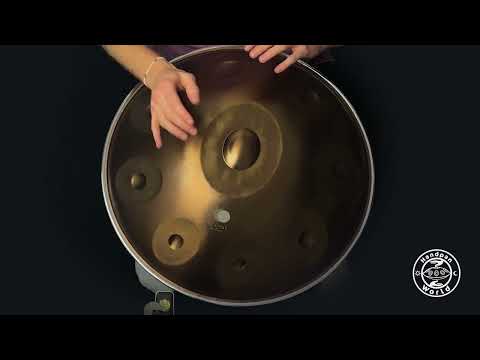
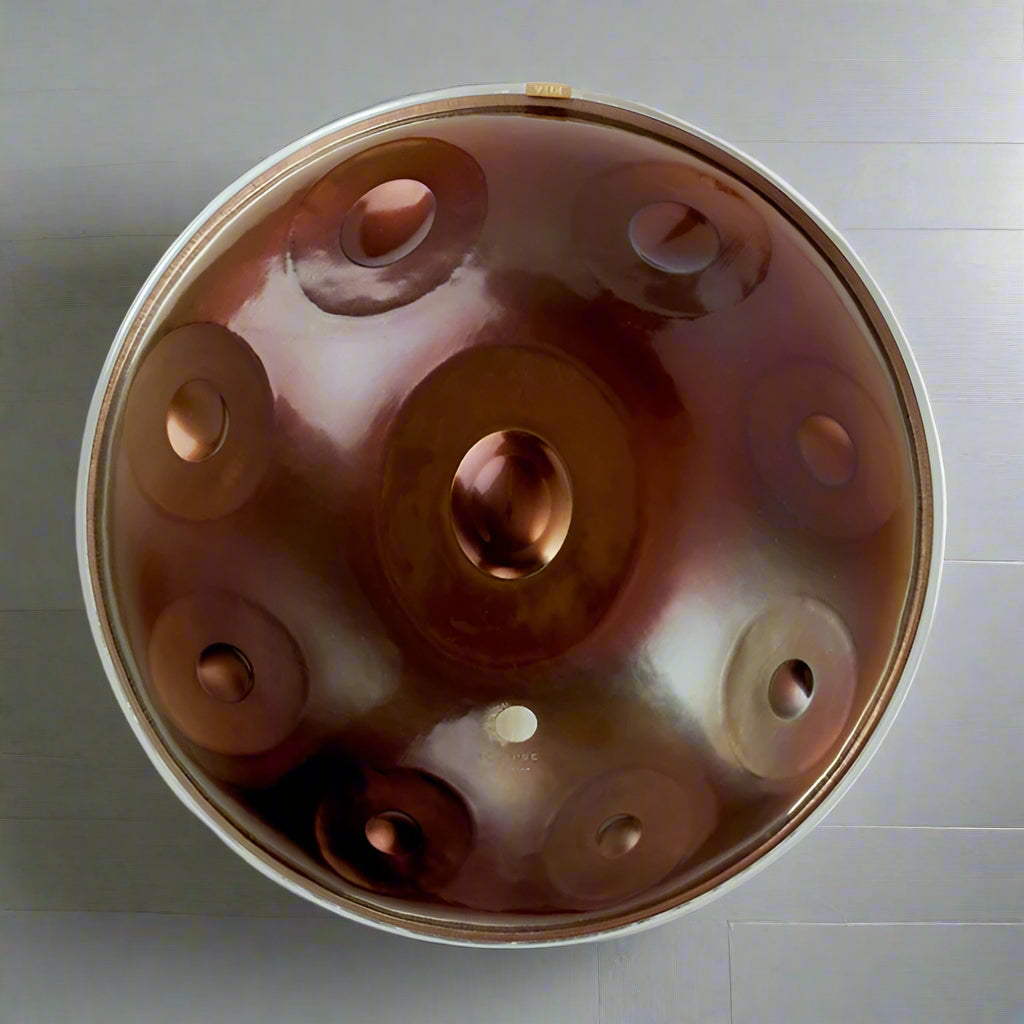
Mood designation: Hijaz
Standard tone sequence: D/ ACD Eb F# GA
Atmosphere : Exotic - Oriental - Far
Tonal center : DING or 1st or 2nd tone
Mode : Phrygian dominant /HMV
Tone range : Heptatonic
Semitones: - 7 - 3 - 2 - 1 - 3 - 1 - 2
from tonal center 1st tone: 1 -3-1-2-3 …
Mood description:
The Hijaz scale takes its name from the Arabic / Turkish Maqam Hijaz. Imagine how the caravan rides away in old oriental films. This is what the Hijaz scale sounds like. This Maqam is characterized by a minor second from the fundamental note (tonal center) to the next higher tone (cf. Phrygian), but then a minor third follows (3 semitones), which makes the third tone a major third in relation to the root tone (hence Phrygian dominant). The scale can also be explained by using a harmonic minor scale and starts from the fifth note of the scale.
Example G minor harmonic: G - A - Bb - C - D - Eb - F# - G
Played from D results in D Hijaz :D - Eb -F# - G - A - Bb - C- D
There are different versions in the handpan world of how this scale is transferred to the handpan. One of the most common is the following:
DING is the fundamental tone (tonal center), to the first tone it is a fifth, then a minor third. The third tone is an octave above the DING. From here it goes in whole tone steps up to the 9th tone, which forms a fifth to the 3rd tone (octave plus fifth from the DING).
In jazz, this mode is also called HMV , which means Harmonic Minor played on the Vth degree.
Hijaz is often used to add an oriental touch. It is also played in flamenco music and in many Turkish and Arabic art and folk music styles.
A very exciting scale to explore enchanting melodies and develop some harmonic ideas. Well suited as an extension to Kurd Scale.
Suitable moods:
Very suitable for collaborative, improvised playing:
- G Romanian Hijaz
- G Harmonic Minor
- D Raga Desh
- C Syamalam
- G Kurd
Also good for composing together: