Mystical Handpan B2 Celtic Minor / Amara Ember Steel

Mystical Handpan B2 Celtic Minor / Amara Ember Steel

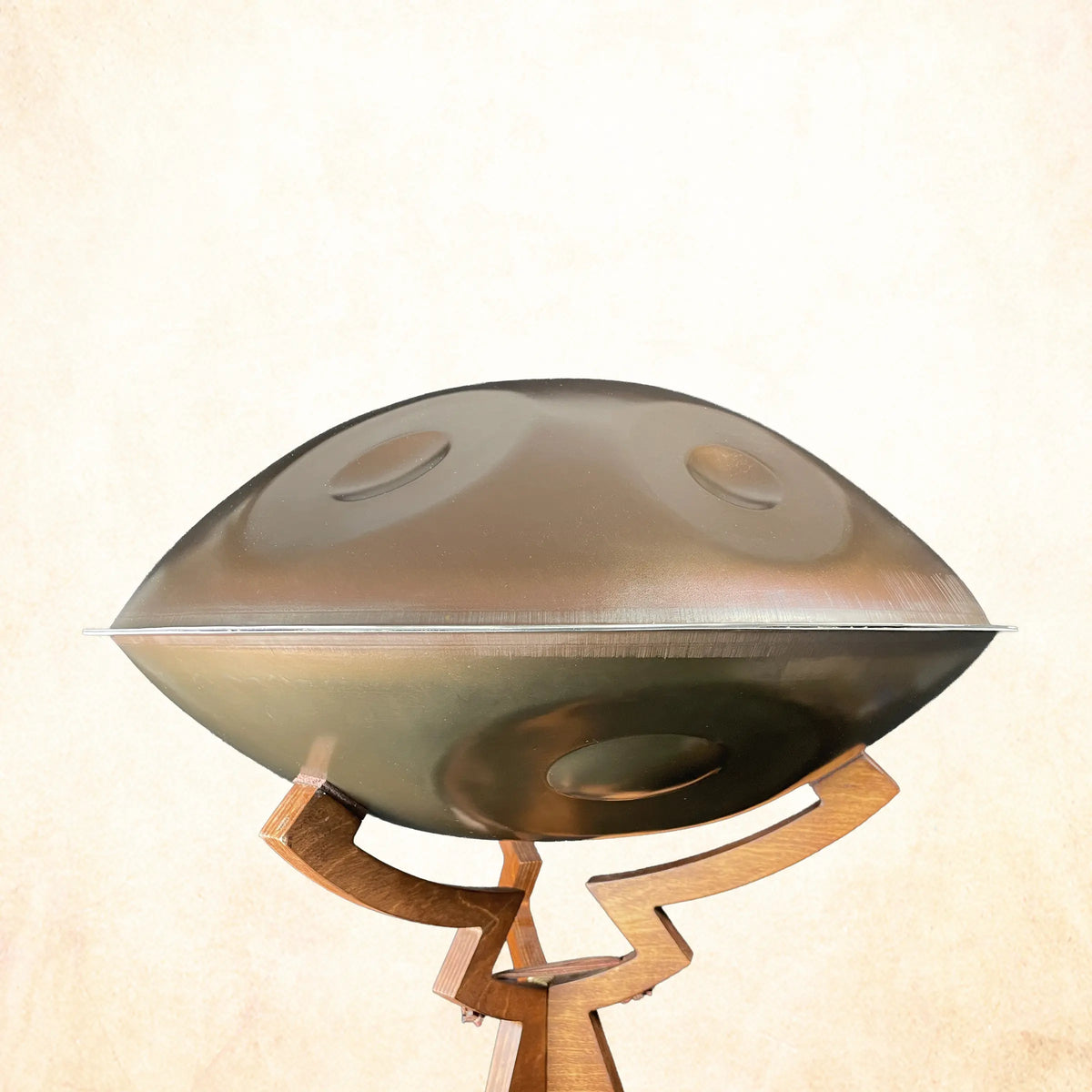
Embersteel Handpan von schräg-oben auf einem Handpan Ständer mit einer weißen Wand als Hintergrund.
Embersteel Handpan von Vorne. Man sieht alle Tonfelder.
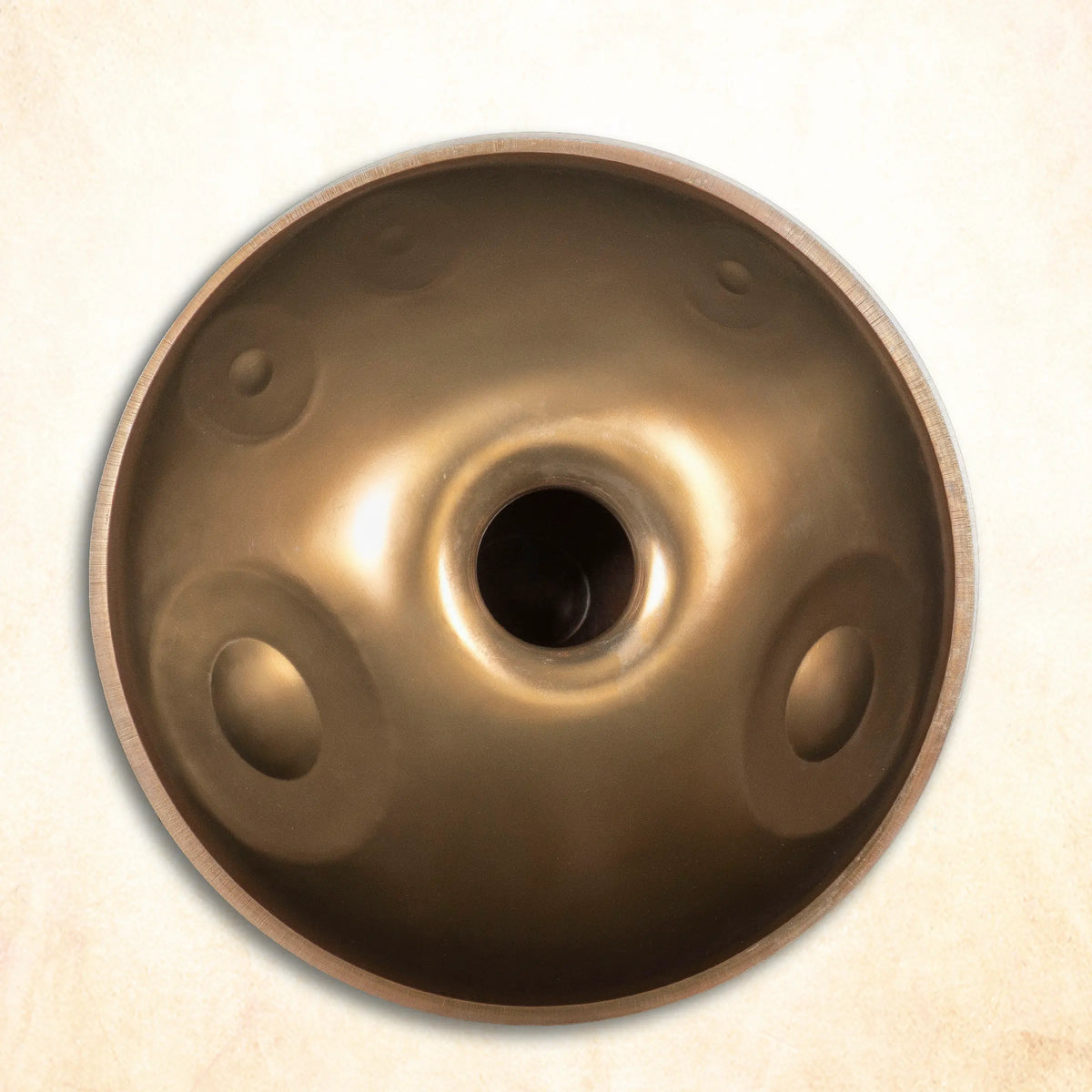
Embersteel Handpan von Unten in einem weißen, hellen Raum.
Embersteel Handpan von schräg-oben auf einem Handpan Ständer mit einer weißen Wand als Hintergrund.
Embersteel Handpan von Vorne. Man sieht alle Tonfelder.
Embersteel Handpan von Unten in einem weißen, hellen Raum.
Regular price €1.401,68
Regular price €1.603,36 Sale price €1.401,68
Sale Sold out
Tax included. Shipping calculated at checkout.

Available options

Frequency

Low stock: 1 left

Lieferbar innerhalb von 7 - 14 Werktagen.

Both their appearance and their sound have something truly mystical that draws us in. Mystical Handpans are characterized by their long sustain and balanced richness of overtones. Even with more intense playing, the notes sound clean. With their pronounced crosstalk of the sympathetic and desired kind, the entire instrument seems to sing. A versatile soundscape is created, which is particularly inviting for spherical and melodic playing.
A striking feature of the Mystical Handpans is the particularly pronounced oval shape of the tone fields, which makes striking the notes easier due to their size. The fifth and third notes of each tone field can also be precisely and particularly pleasantly highlighted.
The Mystical Handpans are made in the stainless steel version from the popular Ember Steel alloy, which is additionally hardened in an intensive heating process and is characterized by a particularly soft tone color, balanced sustain, and long-lasting tuning stability.

Diameter: 53 cm
Height: 25 cm
Weight: approx. 4kg
Material: Ember Steel

Tuning designation: Celtic Minor
Synonym: Amara
Basic note sequence (8+1): B/ F# A B C# D E F# A
Atmosphere: Melancholic- Archaic -Medieval
Mode: Minor - Aeolian
Scale: Hexatonic

Semitones: 7-3-2-2-1-2-2-3

Tonal center: DING


Tuning description:

With this timeless selection of notes (Amara), you effortlessly create sounds that, through pure fifths and fourths, remind one of bygone times. This instrument might have found its place in spiritual ceremonies in the time of the Celts. Compared to the full aeolian mode, the sixth step is not present here, which makes this tuning slightly more open. Especially in the upper range, you can play very beautiful harmonies. This is one of the most popular tunings in the world of handpans.

Characteristic of Amara/Celtic Minor is the jump from DING to the first note in the interval of a pure fifth (example D-A). This fifth jump immediately opens up the tonal space and gives the notes above it a context. The next note lies a minor third above the fifth, which in turn reminds one of the natural harmonic series. From here, there are two whole steps, a semitone step, two whole steps, and the jump of the minor third to the highest note of the tuning, which results from the absence of the sixth step (example D Celtic Minor: note Bb) .

This tuning sounds particularly archaic, as many pure intervals (fifth, fourth, octave) can be played, which were already used in the Middle Ages.

Another special feature arises from the arrangement of the notes: In the example D Celtic Minor, the notes on the right side form the major triad of the root note, in this case D major (A-D-F-A). On the left side, however, all the notes of the major triad are one note below the root note, i.e., C major (C-E-G-C). In harmonic playing, the sound impression of major can thus very easily be represented. It is not for nothing the presumably most widely used handpan tuning.

Matching Handpan Tunings:

Very suitable for playing together and improvising:

Also very suitable for composing together:

Product Description

Both their appearance and their sound have something truly mystical that draws us in. Mystical Handpans are characterized by their long sustain and balanced richness of overtones. Even with more intense playing, the notes sound clean. With their pronounced crosstalk of the sympathetic and desired kind, the entire instrument seems to sing. A versatile soundscape is created, which is particularly inviting for spherical and melodic playing.
A striking feature of the Mystical Handpans is the particularly pronounced oval shape of the tone fields, which makes striking the notes easier due to their size. The fifth and third notes of each tone field can also be precisely and particularly pleasantly highlighted.
The Mystical Handpans are made in the stainless steel version from the popular Ember Steel alloy, which is additionally hardened in an intensive heating process and is characterized by a particularly soft tone color, balanced sustain, and long-lasting tuning stability.

Specifications

Diameter: 53 cm
Height: 25 cm
Weight: approx. 4kg
Material: Ember Steel

About the Tuning

Tuning designation: Celtic Minor
Synonym: Amara
Basic note sequence (8+1): B/ F# A B C# D E F# A
Atmosphere: Melancholic- Archaic -Medieval
Mode: Minor - Aeolian
Scale: Hexatonic

Semitones: 7-3-2-2-1-2-2-3

Tonal center: DING


Tuning description:

With this timeless selection of notes (Amara), you effortlessly create sounds that, through pure fifths and fourths, remind one of bygone times. This instrument might have found its place in spiritual ceremonies in the time of the Celts. Compared to the full aeolian mode, the sixth step is not present here, which makes this tuning slightly more open. Especially in the upper range, you can play very beautiful harmonies. This is one of the most popular tunings in the world of handpans.

Characteristic of Amara/Celtic Minor is the jump from DING to the first note in the interval of a pure fifth (example D-A). This fifth jump immediately opens up the tonal space and gives the notes above it a context. The next note lies a minor third above the fifth, which in turn reminds one of the natural harmonic series. From here, there are two whole steps, a semitone step, two whole steps, and the jump of the minor third to the highest note of the tuning, which results from the absence of the sixth step (example D Celtic Minor: note Bb) .

This tuning sounds particularly archaic, as many pure intervals (fifth, fourth, octave) can be played, which were already used in the Middle Ages.

Another special feature arises from the arrangement of the notes: In the example D Celtic Minor, the notes on the right side form the major triad of the root note, in this case D major (A-D-F-A). On the left side, however, all the notes of the major triad are one note below the root note, i.e., C major (C-E-G-C). In harmonic playing, the sound impression of major can thus very easily be represented. It is not for nothing the presumably most widely used handpan tuning.

Matching Handpan Tunings:

Very suitable for playing together and improvising:

Also very suitable for composing together:

View full details

Questions & answers when buying a handpan:

Reference to manual work on our Handpan instruments

Our handpans are elaborately crafted by hand. Even though our handpans are made with the utmost care and craftsmanship, natural differences in color, slight variations in design and minimal manufacturing marks, such as fine scratches or unevenness on the tone fields and the sound body, may occur.

Visible hammer marks, which are caused by the precise tuning of the instrument by hand, are characteristic features of handmade handpans. They are evidence of authentic craftsmanship and do not represent a quality defect. On the contrary, they emphasize the uniqueness of each instrument.

Pre-orders & custom-made products

Pre-orders:
Are you interested in a handpan that we don't currently have in stock? No problem, we can have your desired handpan made for you.


Custom-made products:

At Handpan.World you can order your handpan exactly as you want it - be it the scale, the note layout or other individual details.

Do you have a special scale or note layout in mind that we don't offer as standard? We can have your handpan made to your specifications by the manufacturer of your choice.

Contact us by email at service@handpan.world or by phone if you have any special requests.

Our handpans are manufactured with the utmost care and precision to guarantee the highest sound quality. However, this quality takes time. Below you will find an overview of the estimated production time for your handpan:

Estimated production time:

  • Standard instruments (9-12 notes, root notes G3 to B2): approx. 4 to 10 weeks
  • Custom-made instruments with low tunings (fundamental A2-E2): up to 3 months
  • Bottomnote instruments up to 15 notes: up to 3.5 months
  • Bottom-note instruments up to 21 notes: up to 4 months
  • Longer production times are to be expectedfor the manufacturers Svaraa, Aya Sounds, NamiPan and Handromeda, in particular due to the high volume of orders.

Note: The stated production times are estimates and do not represent binding delivery dates. Additional factors such as shipping times or possible customs clearance may extend the delivery time.

The estimates are based on our previous experience and are provided without guarantee. Depending on the order situation, delays in the processes or unforeseen events, the actual production time may vary and may be shorter or longer.

You are welcome to contact us at any time to inquire about progress and estimated delivery times.

Note: All items not in stock are made separately at the customer's request and are considered custom-made in accordance with § 312 d para. 4 BGB .

Pre-orders in accordance with Article L 121-20-12 of the Consumer Code are expressly not offered.