Aktuell nicht vorrätig – Jetzt als Sonderanfertigung vorbestellen Unsere Handpans werden mit größter
Sorgfalt und Präzision handgefertigt, um Dir höchste Klangqualität zu garantieren. Diese
außergewöhnliche Qualität benötigt jedoch Zeit.
Hier findest Du eine Übersicht der voraussichtlichen Fertigungsdauer:
• Standard-Instrumente (9-12 Noten, Grundtöne G3 bis B2): ca. 4 bis 10 Wochen
• Sonderanfertigungen mit tiefen Stimmungen (Grundton A2-E2): bis zu 3 Monate
• Bottomnote-Instrumente bis 15 Noten: bis zu 3,5 Monate
• Bottomnote-Instrumente bis 21 Noten: bis zu 4 Monate
• Bei den Herstellern Svaraa, Aya Sounds, NamiPan und Handromeda ist aufgrund hoher Nachfrage mit
längeren Fertigungszeiten zu rechnen.
Currently out of stock - pre-order now as a custom-made product Our handpans are handmade with the
utmost care and precision to guarantee you the highest sound quality. However, this exceptional
quality takes time.
Here you can find an overview of the expected production times:
•Standard instruments (9-12 notes, fundamental notes G3 to B2): approx. 4 to 10 weeks
•Custom-made items with low tunings (fundamental notes A2-E2): up to 3 months
•Bottom note instruments up to 15 notes: up to 3.5 months
•Bottom note instruments up to 21 notes: up to 4 months
•Due to high demand, longer production times can be expected for the manufacturers Svaraa, Aya Sounds,
NamiPan and Handromeda.
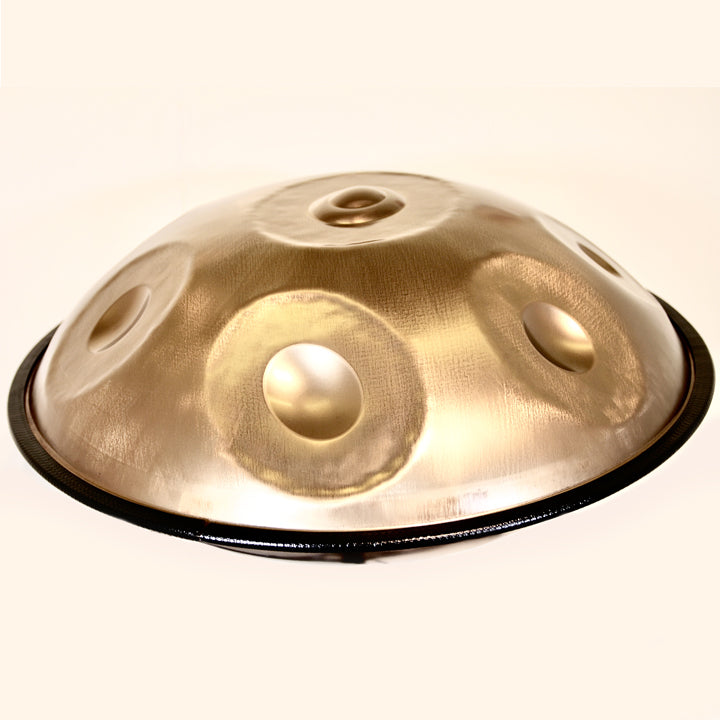
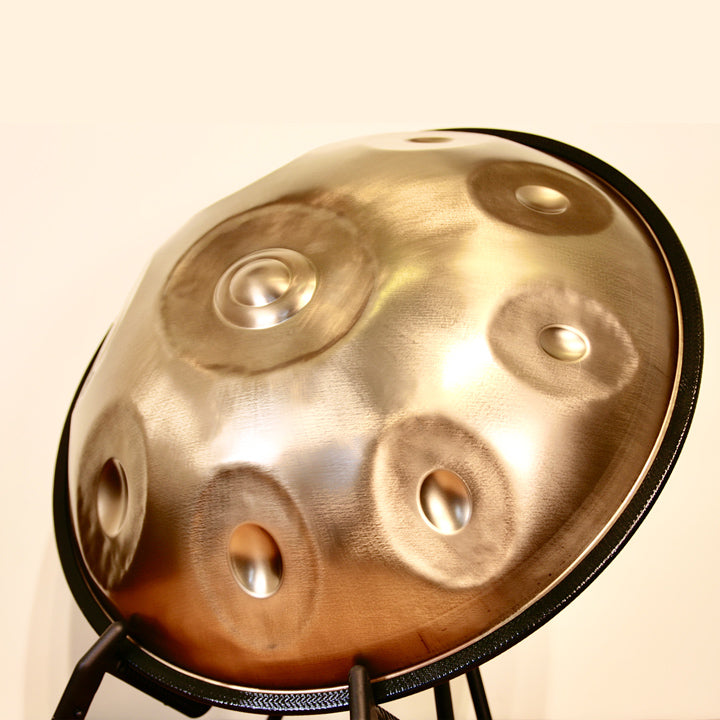
Acquista l'handpan Spirit Soul in acciaio inossidabile nella tonalità C# Annaziska (C# Kurd)
L'handpan Spirit Soul in acciaio inossidabile è uno strumento musicale unico ed espressivo che produce toni straordinariamente potenti. Genera uno spettro sonoro puro e limpido che riempie lo spazio in modo armonioso. Il lungo sustain lascia fluttuare dolcemente i suoni, creando un'atmosfera armoniosa. Ne risulta un magnifico panorama sonoro ricco di armonici, che ci tocca nel profondo e genera un'aura mistica e rilassante, perfetta per un’esecuzione meditativa e distensiva.
Questo handpan è lo strumento ideale per esprimere le tue idee musicali creative e immergerti nel mondo della musica per handpan. Che tu suoni da solo o insieme ad altri musicisti, l'handpan Spirit Soul ti entusiasmerà con il suo ricco spettro sonoro e la sua dinamica espressiva.
Grazie all'acciaio inossidabile di alta qualità, l'handpan Spirit Soul è particolarmente durevole e robusto. È perfetto per l'uso in studio, a casa in soggiorno o in viaggio. Il suo design compatto e il peso ridotto lo rendono facilmente trasportabile, così puoi portarlo ovunque con te.
Spirit Soul - l'handpan perfetto per principianti ed esperti
Indipendentemente dal fatto che tu stia appena iniziando a muovere i primi passi nel mondo degli handpan o che tu sia già un musicista esperto, l'handpan Spirit Soul offre una versatilità impressionante. I suoi toni accordati con precisione ti permettono di suonare bellissime melodie e creare ritmi avvincenti. Rimarrai entusiasta della straordinaria qualità del suono e delle vibrazioni armoniche prodotte da questo handpan.
L'handpan Spirit Soul è anche estremamente facile da usare. Grazie al design ergonomico e alla lavorazione di alta qualità, si appoggia comodamente sulle tue ginocchia o su un supporto per handpan, permettendo un’esecuzione senza sforzo. La superficie appositamente sviluppata assicura una piacevole sensazione al tatto e consente colpi precisi.
Immergiti in una simbiosi unica tra suono e ritmo e scopri il tuo potenziale musicale con uno strumento particolarmente facile da imparare. Con questo handpan in acciaio inossidabile lavorato con cura, ti renderai conto di quanto possa essere semplice suonare l'handpan. Con l'handpan Spirit Soul, intraprendi un viaggio che ti accompagnerà nel mondo dei suonatori e dei musicisti di handpan. Attualmente non conosciamo un handpan più adatto ai principianti. L'handpan Spirit Soul è l'handpan perfetto per i neofiti che vogliono imparare a suonare questo strumento.
Handpan di alta classe realizzati a mano in acciaio inossidabile
Prodotto in acciaio inossidabile di alta qualità, ogni handpan Spirit Soul è sinonimo di qualità e amore per i dettagli. Con i suoi campi sonori realizzati artigianalmente e la sua finitura impeccabile, l'handpan Spirit Soul offre un'esperienza musicale che pochi altri strumenti possono eguagliare.
L'handpan Spirit Soul è un capolavoro di arte sonora realizzato con un laborioso lavoro manuale. Viene posta la massima cura nel far sì che tutti i componenti dello strumento siano in armonia tra loro per produrre un suono di prim'ordine.
L'handpan Spirit Soul non è solo uno strumento musicale di alta qualità, ma anche un capolavoro estetico. Ogni handpan è un pezzo unico, progettato con grande attenzione ai dettagli. La combinazione di qualità artigianale, precisione dell'accordatura e stabilità timbrica rende l'handpan Spirit Soul una scelta eccellente sia per i principianti che per i musicisti professionisti.
Elevata stabilità dell'accordatura e servizio di riaccordatura gratuito
Grazie alla lavorazione precisa degli handpan Spirit Soul, è necessaria una riaccordatura solo dopo 4-5 anni, il che li rende una scelta estremamente durevole e a bassa manutenzione per i suonatori di handpan. Ciò ti permette di concentrarti completamente sulla tua attività musicale senza doverti preoccupare regolarmente del retuning.
Se tuttavia dovesse rendersi necessario un intervento di riaccordatura, noi di Handpan.World offriamo un servizio di "retune" semplice e senza complicazioni. I proprietari di un handpan Spirit Soul possono far riaccordare i propri strumenti professionalmente presso di noi in qualsiasi momento per ripristinare l'ottimale qualità sonora. Nei primi due anni è valida la nostra garanzia Handpan.World, che include il servizio di riaccordatura in modo gratuito.
Conclusione: Perché l'handpan Spirit Soul è così unico
L'handpan Spirit Soul in acciaio inossidabile unisce melodia e ritmo come pochi altri strumenti. Il suono ricco di armonici e caldo, così come il lungo sustain, garantiscono uno speciale piacere nel suonare.
Questi capolavori realizzati a mano sono prodotti con dedizione e amore per i dettagli ai massimi livelli di qualità. La lavorazione di alto pregio e il materiale robusto garantiscono una straordinaria precisione di intonazione e una stabilità timbrica particolarmente duratura.
Questo strumento musicale unico è adatto sia ai principianti e ai neofiti che ai musicisti professionisti.
Diametro: 53 cm Altezza circa: 26,5 cm Peso: circa 4 kg Materiale: Acciaio inossidabile
Denominazione della scala: Pygmy Sequenza tonale standard: C#/ F# G# A C# E F# G# A Atmosfera: Meditativa - Introversa - Fluttuante Centro tonale: DING Modo: Minore Eolio Gamma tonale: Pentatonica
Passi di semitono (Semitones): 2-1-4-3-2-2-1-4
Descrizione della scala Pygmy:
Pygmy è una scala estremamente popolare. Oltre al nome, questa scala condivide con la musica dei pigmei probabilmente solo il numero di toni fino all'ottava (pentatonica). Per le nostre orecchie occidentali, la scala equi-pentatonica utilizzata tradizionalmente da alcuni popoli africani risulterebbe probabilmente molto insolita. Ciononostante, con questa pentatonica emitonica è possibile realizzare molto bene sia pattern ritmici che frasi melodiche.
Una particolarità di entrambe le versioni Pygmy è che quattro dei cinque toni sono presenti ancora una volta un'ottava più in alto, permettendo così agli armonici di rinforzarsi a vicenda (cfr. serie armonica naturale).
Spesso la Pygmy viene definita pentatonica dorica. Questa definizione per noi non è comprensibile, poiché non è presente alcun sesto grado. Il termine pentatonica dorica è probabilmente nato per analogia con i modi ecclesiastici. In combinazione con la pentatonica, questo approccio ha poco senso, poiché in questo esempio non è presente la nota della grande sesta, assolutamente importante per il modo dorico. A parte questo, Pygmy è una scala dal suono molto cool!
La particolarità di questa tonalità Pygmy è che si tratta di una pentatonica emitonica. Ciò significa che, a differenza di una normale pentatonica maggiore o minore (pentatoniche anemitoniche), è presente anche un passo di semitono. Questo si trova tra il primo e il secondo tono; di conseguenza, i primi tre toni della scala minore naturale (Eolia) sono presenti nella Pygmy senza salti. Nell'esempio F Pygmy, questo sarebbe F-G-Ab. Da questo tono c'è il salto di una terza maggiore (detta anche terza dura) verso la tonica di quinta (nell'esempio: tono C). Successivamente segue un salto di terza minore e un passo di tono intero che porta all'ottava. Da qui c'è la stessa sequenza di toni fino alla duodecima (la quinta nell'ottava superiore).
Nonostante la presenza di un passo di semitono e il suo potenziale di dissonanza, la scala Pygmy è molto facile e intuitiva da suonare. Un consiglio vivamente consigliato anche per i principianti!
Tonalità compatibili: Molto adatte per suonare insieme in modo improvvisato:
Acquista l'handpan Spirit Soul in acciaio inossidabile nella tonalità C# Annaziska (C# Kurd)
L'handpan Spirit Soul in acciaio inossidabile è uno strumento musicale unico ed espressivo che produce toni straordinariamente potenti. Genera uno spettro sonoro puro e limpido che riempie lo spazio in modo armonioso. Il lungo sustain lascia fluttuare dolcemente i suoni, creando un'atmosfera armoniosa. Ne risulta un magnifico panorama sonoro ricco di armonici, che ci tocca nel profondo e genera un'aura mistica e rilassante, perfetta per un’esecuzione meditativa e distensiva.
Questo handpan è lo strumento ideale per esprimere le tue idee musicali creative e immergerti nel mondo della musica per handpan. Che tu suoni da solo o insieme ad altri musicisti, l'handpan Spirit Soul ti entusiasmerà con il suo ricco spettro sonoro e la sua dinamica espressiva.
Grazie all'acciaio inossidabile di alta qualità, l'handpan Spirit Soul è particolarmente durevole e robusto. È perfetto per l'uso in studio, a casa in soggiorno o in viaggio. Il suo design compatto e il peso ridotto lo rendono facilmente trasportabile, così puoi portarlo ovunque con te.
Spirit Soul - l'handpan perfetto per principianti ed esperti
Indipendentemente dal fatto che tu stia appena iniziando a muovere i primi passi nel mondo degli handpan o che tu sia già un musicista esperto, l'handpan Spirit Soul offre una versatilità impressionante. I suoi toni accordati con precisione ti permettono di suonare bellissime melodie e creare ritmi avvincenti. Rimarrai entusiasta della straordinaria qualità del suono e delle vibrazioni armoniche prodotte da questo handpan.
L'handpan Spirit Soul è anche estremamente facile da usare. Grazie al design ergonomico e alla lavorazione di alta qualità, si appoggia comodamente sulle tue ginocchia o su un supporto per handpan, permettendo un’esecuzione senza sforzo. La superficie appositamente sviluppata assicura una piacevole sensazione al tatto e consente colpi precisi.
Immergiti in una simbiosi unica tra suono e ritmo e scopri il tuo potenziale musicale con uno strumento particolarmente facile da imparare. Con questo handpan in acciaio inossidabile lavorato con cura, ti renderai conto di quanto possa essere semplice suonare l'handpan. Con l'handpan Spirit Soul, intraprendi un viaggio che ti accompagnerà nel mondo dei suonatori e dei musicisti di handpan. Attualmente non conosciamo un handpan più adatto ai principianti. L'handpan Spirit Soul è l'handpan perfetto per i neofiti che vogliono imparare a suonare questo strumento.
Handpan di alta classe realizzati a mano in acciaio inossidabile
Prodotto in acciaio inossidabile di alta qualità, ogni handpan Spirit Soul è sinonimo di qualità e amore per i dettagli. Con i suoi campi sonori realizzati artigianalmente e la sua finitura impeccabile, l'handpan Spirit Soul offre un'esperienza musicale che pochi altri strumenti possono eguagliare.
L'handpan Spirit Soul è un capolavoro di arte sonora realizzato con un laborioso lavoro manuale. Viene posta la massima cura nel far sì che tutti i componenti dello strumento siano in armonia tra loro per produrre un suono di prim'ordine.
L'handpan Spirit Soul non è solo uno strumento musicale di alta qualità, ma anche un capolavoro estetico. Ogni handpan è un pezzo unico, progettato con grande attenzione ai dettagli. La combinazione di qualità artigianale, precisione dell'accordatura e stabilità timbrica rende l'handpan Spirit Soul una scelta eccellente sia per i principianti che per i musicisti professionisti.
Elevata stabilità dell'accordatura e servizio di riaccordatura gratuito
Grazie alla lavorazione precisa degli handpan Spirit Soul, è necessaria una riaccordatura solo dopo 4-5 anni, il che li rende una scelta estremamente durevole e a bassa manutenzione per i suonatori di handpan. Ciò ti permette di concentrarti completamente sulla tua attività musicale senza doverti preoccupare regolarmente del retuning.
Se tuttavia dovesse rendersi necessario un intervento di riaccordatura, noi di Handpan.World offriamo un servizio di "retune" semplice e senza complicazioni. I proprietari di un handpan Spirit Soul possono far riaccordare i propri strumenti professionalmente presso di noi in qualsiasi momento per ripristinare l'ottimale qualità sonora. Nei primi due anni è valida la nostra garanzia Handpan.World, che include il servizio di riaccordatura in modo gratuito.
Conclusione: Perché l'handpan Spirit Soul è così unico
L'handpan Spirit Soul in acciaio inossidabile unisce melodia e ritmo come pochi altri strumenti. Il suono ricco di armonici e caldo, così come il lungo sustain, garantiscono uno speciale piacere nel suonare.
Questi capolavori realizzati a mano sono prodotti con dedizione e amore per i dettagli ai massimi livelli di qualità. La lavorazione di alto pregio e il materiale robusto garantiscono una straordinaria precisione di intonazione e una stabilità timbrica particolarmente duratura.
Questo strumento musicale unico è adatto sia ai principianti e ai neofiti che ai musicisti professionisti.
Diametro: 53 cm Altezza circa: 26,5 cm Peso: circa 4 kg Materiale: Acciaio inossidabile
Informazioni sulla tonalità
Denominazione della scala: Pygmy Sequenza tonale standard: C#/ F# G# A C# E F# G# A Atmosfera: Meditativa - Introversa - Fluttuante Centro tonale: DING Modo: Minore Eolio Gamma tonale: Pentatonica
Passi di semitono (Semitones): 2-1-4-3-2-2-1-4
Descrizione della scala Pygmy:
Pygmy è una scala estremamente popolare. Oltre al nome, questa scala condivide con la musica dei pigmei probabilmente solo il numero di toni fino all'ottava (pentatonica). Per le nostre orecchie occidentali, la scala equi-pentatonica utilizzata tradizionalmente da alcuni popoli africani risulterebbe probabilmente molto insolita. Ciononostante, con questa pentatonica emitonica è possibile realizzare molto bene sia pattern ritmici che frasi melodiche.
Una particolarità di entrambe le versioni Pygmy è che quattro dei cinque toni sono presenti ancora una volta un'ottava più in alto, permettendo così agli armonici di rinforzarsi a vicenda (cfr. serie armonica naturale).
Spesso la Pygmy viene definita pentatonica dorica. Questa definizione per noi non è comprensibile, poiché non è presente alcun sesto grado. Il termine pentatonica dorica è probabilmente nato per analogia con i modi ecclesiastici. In combinazione con la pentatonica, questo approccio ha poco senso, poiché in questo esempio non è presente la nota della grande sesta, assolutamente importante per il modo dorico. A parte questo, Pygmy è una scala dal suono molto cool!
La particolarità di questa tonalità Pygmy è che si tratta di una pentatonica emitonica. Ciò significa che, a differenza di una normale pentatonica maggiore o minore (pentatoniche anemitoniche), è presente anche un passo di semitono. Questo si trova tra il primo e il secondo tono; di conseguenza, i primi tre toni della scala minore naturale (Eolia) sono presenti nella Pygmy senza salti. Nell'esempio F Pygmy, questo sarebbe F-G-Ab. Da questo tono c'è il salto di una terza maggiore (detta anche terza dura) verso la tonica di quinta (nell'esempio: tono C). Successivamente segue un salto di terza minore e un passo di tono intero che porta all'ottava. Da qui c'è la stessa sequenza di toni fino alla duodecima (la quinta nell'ottava superiore).
Nonostante la presenza di un passo di semitono e il suo potenziale di dissonanza, la scala Pygmy è molto facile e intuitiva da suonare. Un consiglio vivamente consigliato anche per i principianti!
Tonalità compatibili: Molto adatte per suonare insieme in modo improvvisato:
Meine Spirit Soul Handpan D Kurd Edelstahl 13Töne in 432 Hz kam schnell und perfekt verpackt bei mir in der Toskana an. Ich bin absolut begeistert von diesem tollen warmen Klang und kann gar nicht mehr aufhören zu spielen. Am liebsten draußen im Garten. Gerade entdecke ich die vielen Töne und bin gespannt was wir musikalisch alles zusammen erleben.
Die Mitarbeiter von Handpanworld waren übrigens super hilfsbereit und freundlich.
Store owner replied:
Wow, vielen Dank für diese wundervolle Rückmeldung! 🇮🇹✨
Es zaubert uns ein riesiges Lächeln ins Gesicht, wenn wir uns vorstellen, wie die warmen Klänge deiner Spirit Soul Kurd in 432 Hz jetzt durch einen Garten in der Toskana schwingen. Genau für solche magischen Momente machen wir das!
Ein ganz großes Dankeschön auch für deine lieben Worte an unser Team – das bedeutet uns extrem viel. Wir wünschen dir eine fantastische Entdeckungsreise mit deinen 13 Tönen und unzählige inspirierende Stunden im Freien! :))
Schnelle und sehr gut verpackte Lieferung. Schönes Klangbild, wie im YouTube vorgestellt.
Store owner replied:
Vielen Dank für deine Rückmeldung und deine schöne Bewertung! Es ist schön zu hören, dass du so viel Freude mit deiner Handpan hast.
Ich gebe das Lob direkt an Sabrina weiter – sie freut sich bestimmt riesig darüber.
Ganz viel Spaß dir weiterhin beim Spielen und alles Gute!
Handpan kam schnell hier an und war top verpackt.
!!!!
Store owner replied:
Vielen Dank für deine liebe Rückmeldung! Es ist immer ein richtig gutes Gefühl zu wissen, dass die Handpan schnell und wohlbehalten ihr neues Zuhause erreicht hat – beim Einpacken geben wir uns auch immer besonders viel Mühe.
Jetzt wünschen wir dir erstmal ganz viel Spaß beim Auspacken, Ausprobieren und Eintauchen in den Klang! Lass das Instrument ganz entspannt auf dich wirken.
Falls du am Anfang Fragen hast oder Tipps brauchst, melde dich jederzeit super gerne bei uns.
Die Handpan klingt sehr hell und warm...eine tolle Ergänzung zu Fpygmy und D kurd
Store owner replied:
Vielen lieben Dank für deine tolle Bewertung! 😊
Es freut uns sehr, dass dir der helle und warme Klang deiner neuen Handpan so gut gefällt und sie deine F Pygmy und D Kurd so schön ergänzt.
Wir wünschen dir ganz viel Freude beim Spielen und viele schöne Klangmomente mit deinen drei Instrumenten. 🎶
Ich habe von einer Bekannte eine Spirit Soul C# lydian gekauft.
Ein tolles Instrument. Klarer Klang, intuitiv zu spielen. Ein Instrument, welches Spaß macht von hervorragender Qualität
Store owner replied:
Vielen lieben Dank für deine tolle Bewertung! :))
Es freut uns sehr, dass dich die Spirit Soul C# Lydian so überzeugt und du besonders den klaren Klang, die intuitive Spielbarkeit und die Qualität des Instruments schätzt.
Wir wünschen dir ganz viel Freude beim Spielen und viele schöne Klangmomente mit deiner Handpan! 🎶
Wunderbarer Klang, obwohl ich durch die Klangbeispiele online bestellt habe, ist das Ergebnis meiner Bestellung sehr zufriedenstellend. Von daher 5 Sterne.
Hallo zusammen, nachdem wir unsere Schwiegertochter auf der Handpan spielen gehört haben, haben wir uns sofort in diesen unvergleichlichen Klang verliebt. Wir wollten uns auch eine Handpan zulegen und bekamen die Kontaktdaten vom Franken Showroom von unserer Schwiegertochter. Ein Anruf und einen Tag später waren wir bei Leo im Franken Showroom. Leo war sehr geduldig und hat uns sehr gut beraten, sodass Leo uns noch am gleichen Tag die von uns gewünschte Handpan bestellt hat.Der telefonische Kontakt mit Handpan World in München mit Basti war super nett und Basti konnte ein Missverständniss zu unserer Zufriedenheit klären und war sehr zuvorkommend. Ca.10 Tage nach der Bestellung war sie dann da und top in Ordnung, da sie auch super verpackt war.👍 Wir sind total happy mit unserer Spiritsoul Handpan mit 10 Tonfelder und möchten nochmal an Leo u. auch an Basti Danke sagen. Macht weiter so. 😊
Völlig begeistert von den wunderschönen Klängen der Handpan-Musik begab ich mich als völliger Neuling auf die Suche nach einem zu mir stimmigen Instrument. Recht schnell fand ich im Internet den Showroom Wundervoll in Stockach. Die Inhaberin Anja machte gleich beim ersten Kennenlernen ihrem Shopnamen alle Ehre: sie nahm sich an einem Samstagmorgen alle Zeit, um mich zu beraten, auf meine Wünsche einzugehen und meine vielen Fragen zu beantworten....alles in großer Gelassenheit, dennoch mit bewundernswerter Professionalität...und mit viel Raum für eigenes Nachspüren und intutitives Abtauchen.
Nach ca. 4 Stunden fand meine Handpan in großer Resonanz und Stimmigkeit zu mir...samt Handpan- Softcase, sodass ich als überglückliche "turtle" den Laden verließ...wohlgemerkt, und das erstaunte mich völlig, ohne dass ich meine Kostbarkeiten zu diesem Zeitpunkt bereits bezahlt gehabt hätte. Eine von mir unterschriebene Empfangsbestätigung reichte aus. Nach einer halben Woche erhielt ich per Mail die Rechnung für meine Schätze, welche ich völlig problemlos per Online-Banking begleichen konnte. Zwischendurch stand ich mit Anja immer wieder in freundschaftlichem Whatsapp-Kontakt, so als würden wir uns schon ewig kennen.
Welch vertrauensstärkende Kauf-Erfahrung mit einer gänzlich natürlichen und überaus engagierten und freundlichen Ladenbesitzerin!!!
Viiiiielen Dank!!!
Seither ist das abendliche Improvisieren auf meiner wundervollen Handpan bereits zu einem traumhaften Abendritual geworden.
Nachdem meine Handpan nun noch einen wunderschönen selbstgemachten Handpan-Halter bekommen hat und in Ruhezeiten mein Wohnzimmer ziert, schwingt meine Wohnung und ich in unbeschreiblichem Glück und Frieden!!!
Hallo Ihr Lieben,
ich bin ein völliger Neuling im Handpan-Spielen....dafür aber umsomehr von dem warmen und heilsamen Klang fasziniert!
Als Körper- und Ausdruckstherapeutin, sowie Heilberaterin und Reformpädagogin spricht mich insbesondere der intuitive und damit nicht kopflastige kreativ- meditative Zugang an.
Den Klang des Instruments spielerisch in Erfahrung bringen zu können, als auch mich durch Videos oder ab und zu durch Teilnahme an einem Workshop inspirieren lassen zu können, begeistert mich im HInblick auf selbstbestimmtes Lernen im eigenen Tempo.
Der wunderschöne Zusammenklang in der Gruppe beflügelt und motiviert mich von Mal zu Mal aufs Neue.
Ich bin überaus neugierig, wohin mich diese Handpan-Reise "innerlich wie äußerlich", mit mir und in Gemeinschaft hinführen wird.
Hallo!
Ich habe die handpan für meinen Onkel Antonius gekauft. Er hatte eine Sendung im TV gesehen, wo jemand auf der handpan spielte und danach den Wunsch geäußert, selber eine zu besitzen. Er hatte mich beauftragt, eine handpan für ihn zu besorgen und war auf eure Homepage gestoßen. Ich konnte ihm so mehrere handpans vorspielen und er hatte sich für die gekaufte entschieden. Ihr müsst wissen, dass er fast blind ist und jetzt fast täglich auf der handpan spielt, besonders abends zum "runterkommen". VG Hiltrud
Store owner replied:
Liebe Hiltrud,
vielen herzlichen Dank für deine berührende Rückmeldung! 🌟
Es macht uns wirklich glücklich zu hören, dass dein Onkel Antonius durch die Handpan solch eine besondere Freude gefunden hat – gerade in einem Moment der Ruhe am Abend. Dass er trotz seiner eingeschränkten Sehkraft so viel Freude am Spielen empfindet, berührt uns sehr. Die Vorstellung, wie er die Klänge erfühlt und in seine eigene Klangwelt eintaucht, ist einfach wunderschön.
Danke auch dir für deine liebevolle Unterstützung bei der Auswahl – solche Geschichten erinnern uns daran, warum wir tun, was wir tun. 💛
Wir wünschen euch beiden viele klangvolle, entspannte und inspirierende Momente!
Mit herzlichen Grüßen
Dein Handpan.World Team 🎶💫
Vielen Dank für diese wundervoll klingende Handpan. Die Lieferung passierte ohne Komplikationen innerhalb einer Woche! Der Klang ist voll und ätherisch. Das Preis-Leistungsverhältnis für 11 Tonfelder richtig gut. 👏🏻
Store owner replied:
Vielen lieben Dank für deine tolle Rückmeldung! 😊
Es freut uns sehr, dass du mit deiner Handpan so zufrieden bist – sowohl klanglich als auch in Bezug auf die Lieferung und das Preis-Leistungs-Verhältnis.
„Voll und ätherisch“ klingt wunderschön – genau so soll es sein!
Wir wünschen dir viele inspirierende und klangvolle Momente mit deinem Instrument.
Herzliche Grüße
Dein Handpan.World Team
Ich bin total begeistert...sie klingt noch viel besser als ich gedacht habe. Sehr klarer Klang, selbst bei den hohen Tönen...hab mich sofort verbunden gefühlt. Und lässt sich wirklich super leicht anspielen.
I've been waiting for my handpan for a few weeks since I live in Mexico. I'm delighted it finally arrived. It's lived up to my expectations; it was well worth the wait.
Store owner replied:
Thank you so much for your patience and for sharing your experience! 😊 We truly appreciate your understanding regarding the shipping time to Mexico, and we’re thrilled to hear that your Handpan has finally arrived and lived up to your expectations.
It means a lot to us that you find it well worth the wait! If you’d like to dive deeper into the world of Handpans, check out our blog with useful tips and insights:
👉 https://www.handpan.world/blogs/grundwissen-handpan-drum-instruments
Should you have any questions or need assistance in the future, we’re always happy to help. Enjoy your musical journey! 🎶✨
Best regards,
Your Handpan.World Team
Ich habe mich von Anfang an in diese Handpan verliebt. Dazu kam die tolle Erfahrung mit den netten Angestellten, in Aschaffenburg sowie in München. Ich habe mich sofort wohl gefühlt, tolle Beratung, super Atmosphäre, was soll ich sagen, ich habe die Handpan gleich gekauft und bin immer noch begeistert. Jedem der sich für eine Handpan interessiert kann ich Handpan World in Aschaffenburg und München wärmstens empfehlen.
Store owner replied:
Wow, herzlichen Dank für dein wundervolles Feedback! 😊 Es freut uns riesig, dass du dich von Anfang an in deine Handpan verliebt hast und die Erfahrung in unseren Showrooms in Aschaffenburg und München so positiv war. 💙
Genau das ist unser Ziel – eine herzliche Atmosphäre, kompetente Beratung und das perfekte Instrument für dich zu finden. Dass du immer noch begeistert bist, macht uns besonders glücklich! 🎶✨
Danke für deine Empfehlung und weiterhin ganz viel Freude mit deiner Handpan!
Liebe Grüße,
Dein Handpan.World Team
Wir wollten zu Weihnachten unser umfangreiches Sortiment an Klangschalen und Gongs mit einer Tongue-Drum ergänzen, um auf einfache Weise und ohne großen Aufwand schöne meditative Musik zu machen.
Die preiswerte Zungentrommel von einem intensiv werbenden Hersteller/Vertrieb war eine einzige Enttäuschung: klang überhaupt nicht gut und wurde daher gegen Erstattung des Kaufpreises zurückgeschickt.
In dem Zusammenhang sind wir auf Handpans aufmerksam geworden.
Durch eingehende Information auf mehreren einschlägigen Handpan-Websites und durch zahlreiche YouTube-Videos wurde unsere Begeisterung geweckt für die Klangwelten, die mit Handpans erzeugt werden können, und wir haben uns schließlich zu einer Beratung im Showroom Oldenburg entschlossen und uns dort zunächst verschiedene Handpan-Typen und Handpan-Stimmungen vorführen lassen.
Die eingehende, etwa zweistündige Beratung und Vorführung durch Feu Diaz fand in sehr freundlicher, überaus angenehmer Atmosphäre und kompetenter Weise in seinem sehr schön gestalteten Showroom statt.
Vielen Dank dafür.
Die vorhandene Auswahl an Handpans und Zubehör und vor allem die Tipps und Empfehlungen von Feu Diaz haben uns die Entscheidung leicht gemacht. Mit Blick auf künftige Online-Tutorials und ggf. Workshops usw. und auch angesichts der Empfehlungen aus den zahllreichen Vorinformationen haben wir uns auf die Stimmung D Kurd fokussiert.
Die Entscheidung fiel auf eine zur Vorführung verfügbare Spirit Soul in D Kurd, 440 Hz, mit 10 Klangfeldern auf der Oberseite und 5 Bottom-Notes, die wir sofort mitnehmen konnten. Damit dürfte zunächst der Einstieg für uns als Anfänger leicht(er) möglich sein, eröffnet aber auch als Option bei entsprechenden Fortschritten die Einbeziehung der Bootom-Notes.
Erscheinungsbild, Klang und Handhabung erfüllen die Erwartungen auf wunderschöne Weise.
Die kurzfristige Verfügbarkeit einer zweite Handpan (ebenfalls Spirit Soul D Kurd 440 Hz, aber "nur" mit 10 Noten auf der Oberseite in identischer Anordnung) wurde sogleich telefonisch geklärt, so dass die Bestellung ausgelöst werden konnte.
Fazit: vollste Zufriedenheit, der Ausflug von Bremen in den Showroom nach Oldenburg war rundum gelungen und kann bestens empfohlen werden!
Store owner replied:
Wow, vielen Dank für diese ausführliche und wunderbare Rückmeldung! 😊 Es freut uns riesig zu hören, dass ihr durch eure Klangreisen zur Handpan gefunden habt und euch der Besuch in unserem Showroom in Oldenburg so begeistert hat. 🎶✨
Ein großes Dankeschön auch für eure Wertschätzung der individuellen Beratung von Feu Diaz – es ist uns besonders wichtig, dass jeder die perfekte Handpan für sich findet, und es klingt, als wäre die Spirit Soul D Kurd 440 Hz genau das richtige Instrument für euch! Die Kombination aus Oberflächen- und Bottom-Notes bietet euch vielseitige Spielmöglichkeiten, sowohl für den Einstieg als auch für eure musikalische Entwicklung.
Es freut uns sehr, dass euer Besuch in Oldenburg ein voller Erfolg war und ihr nun zwei wundervolle Handpans euer Eigen nennen könnt. Danke für euer Vertrauen und eure Empfehlung – wir wünschen euch ganz viel Freude beim Spielen und Entdecken der Handpan-Welt! 💙
Liebe Grüße,
Euer Handpan.World Team
Wunderschöner Klang - ich wollte eigentlich eine 432h für Anfänger, aber als ich diese Spirit Soul 440h 15 DKurd im Frankfurter Showroom gehört habe war es um mich geschehen. Ich übe seitdem fleißig und freue mich jetzt schon über die zusätzlichen Möglichkeiten durch die Bottom Notes :-)
Store owner replied:
Vielen Dank für dein tolles Feedback! 😊 Es freut uns riesig, dass dich die Spirit Soul 440 Hz D Kurd im Frankfurter Showroom so begeistert hat! 🎶✨ Manchmal findet einen die perfekte Handpan ganz von selbst.
Super, dass du fleißig übst – die Bottom Notes eröffnen dir mit der Zeit noch mehr klangliche Möglichkeiten. Wir wünschen dir weiterhin ganz viel Freude und inspirierende Momente mit deinem Instrument! 💙
Liebe Grüße,
Dein Handpan.World Team
It was a great experience! I love my handpan. I am new to it, so still learning, but I already love the sound and the look of it. Thank you!
Store owner replied:
Thank you so much for your wonderful feedback! 😊 We're thrilled to hear that you love your Handpan and that you had a great experience with us. 🎶✨
Enjoy every step of your learning journey – the more you play, the more magical it becomes! If you ever have any questions or need tips, we’re always here to help.
Wishing you lots of joy and inspiration with your Handpan! 💙
Best regards,
Your Handpan.World Team
Endlich habe ich sie! Ich wollte seit Jahren eine eigene Handpan, war aber immer unsicher was zu mir passt. Durch Recherche im Internet bin ich dann auf Handpan World gestoßen und erfuhr das es ein Showroom direkt in meiner Nähe gibt. Ich habe ein Termin vereinbart und habe gemeinsam mit Morris im Handpan Showroom Trier eine tolle Reise erleben dürfen. Eine professionelle Beratung im besonderen Ambiente. Ich konnte einige Handpans testen und habe Zeit und Raum bekommen, meine eigene persönliche Handpan- Vorliebe herauszufinden. Es war etwas ganz besonderes. Nach der tollen Beratung bin ich glücklich mit meiner Spirit Soul D Paradiso in 432hz nach Hause gefahren. Ein unglaublicher Service und sehr zu empfehlen.
Store owner replied:
Wow, vielen lieben Dank für dein wunderbares Feedback! 😊 Es freut uns riesig, dass du nach so langer Suche endlich deine perfekte Handpan gefunden hast! 🎶✨
Es klingt, als wäre dein Besuch im Handpan Showroom Trier mit Morris eine ganz besondere Erfahrung für dich gewesen – genau so soll es sein! Wir möchten, dass sich jeder die Zeit nehmen kann, um das passende Instrument zu finden, und es ist schön zu hören, dass du diese Reise genießen konntest.
Wir wünschen dir unendlich viele inspirierende und magische Klangmomente mit deiner Spirit Soul D Paradiso in 432 Hz! 💙 Danke für dein Vertrauen und deine Empfehlung!
Liebe Grüße,
Dein Handpan.World Team
Hallo liebes Handpan.World-Team.
Danke für diese tolle Handpan! Sie ist ein wahres Klangwunder und bringt mir jeden Tag große Freude! Eure professionelle Unterstützung und erstklassige Beratung haben mir dabei geholfen, das perfekte Instrument für mich zu finden. Absolut empfehlenswert!
Auch die Bestellung im Shop, über die ich gerade das Pflege- Öl bezogen habe, lief reibungslos und einwandfrei. Innerhalb weniger Tage war das hochwertige Öl sicher verpackt bei mir. Besten Dank an euch!
Store owner replied:
Vielen lieben Dank für dein wundervolles Feedback! 😊 Es freut uns riesig, dass deine Handpan für dich ein wahres Klangwunder ist und dir täglich Freude bereitet! 🎶✨
Dass wir dich mit unserer Beratung und Unterstützung auf dem Weg zu deinem perfekten Instrument begleiten durften, bedeutet uns sehr viel. Schön zu hören, dass auch deine Bestellung im Shop und die Lieferung des Pflegeöls reibungslos funktioniert haben!
Wir wünschen dir weiterhin ganz viel Freude mit deiner Handpan und allzeit strahlende Klänge! 💙
Liebe Grüße,
Dein Handpan.World Team
Diese Handpan ist wirklich wunderbar.
Schöne weiche und kraftvolle Töne.
Die Lieferung hat wieder perfekt geklappt.
Vielen Dank und sonnige Grüße
Store owner replied:
Vielen lieben Dank für dein wunderbares Feedback! 😊 Es freut uns sehr, dass dich deine Handpan mit ihren weichen und kraftvollen Tönen begeistert. 🎶✨
Schön, dass auch die Lieferung reibungslos geklappt hat – genau so soll es sein! Wir wünschen dir weiterhin viel Freude mit deinem Instrument und viele klangvolle Momente.
Sonnige Grüße zurück! 🌞💙
Dein Handpan.World Team
Ich habe die Handpan nun schon ein paar Wochen und bin begeistert von der Qualität und dem Klang. Ich war auf der Suche nach einer in Dur gestimmten Handpan und einer 432hz Stimmung. Auf der Seite von Handpan World gab es eine große Auswahl, wo ich schließlich fündig geworden bin.
Der Service und kontakt mit Handpan World lief einwandfrei und würde ich zu 100% empfehlen.
Viele Grüße
Lisa
Store owner replied:
Liebe Lisa,
vielen Dank für dein wundervolles Feedback! 😊 Es freut uns riesig, dass du die perfekte Handpan für dich gefunden hast und sie dich mit ihrer Qualität und ihrem Klang begeistert. 🎶✨
Dass du gezielt eine Dur-Stimmung in 432 Hz gesucht hast und bei uns fündig geworden bist, freut uns besonders – unsere große Auswahl soll genau das ermöglichen! Schön, dass auch der Service und Kontakt für dich einwandfrei waren.
Vielen Dank für deine Empfehlung und weiterhin ganz viel Freude mit deiner Handpan! 💙
Viele Grüße,
Dein Handpan.World Team
Nachdem ich 7 (!) Monate ohne Erfolg bei einem Shop geordert hatte, brauchte es nun nur noch einige Tage bei HandpanWorld für den Versand und bei DHL weitere 6 Tage für den Weitertransport . Dann kam das Instrument nach gefühlten zwei Wochen ersehnt und gut verpackt, sogar mit Tasche (!) bei mir an.
Ich kann sagen, das Warten hat sich voll gelohnt!!
Nachdem ich über mehrere Jahre bereits einige Handpans gespielt habe ist dies hier MEIN INSTRUMENT !!
Wunderschön gearbeitet, toller Sound, spricht gut an, saubere Obertöne und als Schmankerl der 10 Ton in der Unterschale.
Dieser hohe Ton (Oktave?) macht die Sache/Scale rund.
Aus meiner Sicht sehr zu empfehlen.
Auch optisch passt sich Edelstahl / bronze schön in mein eher warmes Wohnambiente ein.
Preislich natürlich nicht günstig - jedoch preiswert.
Liebe Grüße :)
Der Versand ging super schnell. Die Qualität ist Top und den Preis definitiv wert .
Die Handpan klingt unglaublich harmonisch und schwingt richtig lang nach. Genau so hab ich mir das vorgestellt. Einfach super!
Nur zu empfehlen!!!
Welch wundervolles Instrument! Ich bin Musiktherapeut und Musiklehrer in einer Berufsschule. In der letzten Woche hatte ich die Handpan zum ersten Mal in der Schule dabei, und alle Schüler waren vom ersten bis zum letzten Ton so still, dass man die fallende Stecknadeln gehört hätte. Die Handpan übt eine Magie aus, die nur schwer in Worte zu fassen ist. Auch in der Musiktherapie wird sie ganz sicher ein tolles Werkzeug sein. Das Spielen macht großen Spaß und gerade die Obertöne bringen den Raum zum Schweben. Das Instrument ist top verarbeitet und wird mir noch viel Freude bereiten. Danke für die kompetente telefonische Beratung!
Bin sehr zufrieden mit meiner 432 D Kurd . 😊 der Service ist erstklassig. Ich hatte zunächst eine 440 in einem showroom gekauft, kam mit der jedoch nicht wirklich zurecht . Der Austausch lief völlig problemlos und ganz entspannt .
Die 432 lässt sich ganz einfach anschlagen und spielt sich ganz leicht für einen Handpan Beginner . Top ! * sorry das Video ist einhändig 😉
Simone vom Showroom Osnabrück hat es mir ermöglicht ohne Termin mehrere Handpans auszuprobieren. Sie hat sich viel Zeit genommen, bis ich die für mich passende Handpan gefunden habe. Eine sehr nette Atmosphäre und gute Beratung.
Vielen Dank noch mal, Sigrid
Meine erste Hand Pan, frisch geölt am Katanui Wandhalter.
Klang: So schön warm und voll wie erwartet.
Lieferzeit: Ich habe befürchtet, dass ich sie womöglich erst nach 8 Wochen erhalte, aber sie war schon nach 11 Werktagen da und zwar gut verpackt in einer großen Schachtel, im mitbestellten Hardcase, umhüllt von einer Blisterfolie.
Der Besuch bei Handpan world Chiemgau war für mich ein tolles Erlebnis. Herr Helge Obert hat mich kompetent beraten und mir sehr einfühlsam die verschiedenen Instrumente erklärt und die Unterschiede aufgezeigt. Er hat sich sehr viel Zeit genommen . Ich habe durch ihn die Handpan gefunden, die mich anspricht und dafür möchte ich mich ganz herzlich bedanken . Sybille Schönhuber
Das Instrument übertrifft meine Erwartungen. Absolut stimmstabil. Es dauerte länger als 8 Wochen - was kein Problem wäre, wenn sich mal jemand gemeldet hätte. Eine Email hätte genügt nach Ablauf von zwei Monaten. Aber dafür hat sich das Warten gelohnt: wunderbarer Klang.
Store owner replied:
Lieber Arne, danke für Deine 5 Sterne Bewertung, obwohl Du kein Update zum Stand Deiner Bestellung erhalten hast. Aktuell ist es bei der hohen Anzahl an Vorbestellungen tatsächlich nicht so leicht, über jede Verzögerung in der Anfertigung und Lieferung zu informieren.
Wir nehmen Dein Feedback auf und versuchen eine automatisierte Lösung zu finden, Euch treue Handpan.World Bewohner über Verzögerungen oder Änderungen zu informieren.
Auch bei Problemen sehr guter Service, tolle Mitarbeiter !
Was soll ich erzählen....Ihr bietet ein Rundumsorglospaket an und haltet Euer Verspechen, vielen Dank dafür.
Da ich eine Anfängerin im Handpanspiel bin darf ich sagen, es war und ist Liebe auf den ersten Blick und Klang : )
Nachbestellt habe ich noch einen Handpanständer aus Holz, nun ist auch dieser in meinem Besitz, ein schönes Ensemble.
Also...von mir gibt es alle Daumen nach oben.
Ich wünsche allen eine klangvolle Zeit 🧘♀️🙏
Hatte mir zuerst eine Handpan ausgeliehen. Die Gebühren dafür werden beim Kauf abgezogen. Ich fasse es mal so zusammen. Im Shop war es eine tolle Zeit die Pan auszusuchen. Fühlte mich sehr wohl und mit "Herz und Verstand" beraten. Ich kann es nur empfehlen. Jetzt werde ich gleich nochmal meine tolle Handpan spielen :)
Die Spirit Soul hat eine sehr schöne warme Klangfarbe und einen schönen langen Nachklang. Ich bin mit der Handpan sehr zufrieden. Das Preis-Leistungsverhältnis stimmt voll und ganz.
Das Probespielen im Berliner Showroom hat sehr viel Spaß gemacht. Die Beratung war kompetent und freundlich. Auch mit dem Kundenservice bin ich voll und ganz zufrieden.
Ein großes Dankeschön!
Eine echt wunderschöne Handpan, hab mich sofort beim Beispiel-Video schauen verliebt !! 😍 (wäre gern vorbeigekommen, ist aber leider zu weit weg für mich)
Ein echt warmer, hypnotischer Klang, nur der Bass könnte, meines Geschmackes nach, minimal stärker sein, ist aber trotzdem dominant..
Und es sind ein paar kleinere „Macken“ drin gewesen, aber das ist das Einzige, was ich zu beanstanden hätte, ist ja nicht schlimm…😇; macht echt ne Menge Spaß…
Kann sie auf jeden Fall weiterempfehlen !!! 🤟🏻🤪
Perfekte Bezahl-Abwicklung und Lieferung übrigens, sehr gerne wieder!! 👍
Vielen ♥️-lichen Dank für Alles !!!!! 🥰🥰🥰
musikalische Grüße aus Neubrandenburg
Erik L.
Wir sind durch Zufall auf eine Handpan gekommen. Von den vielen Soundvideos waren wir begeistert und haben uns recht schnell von dieser überzeugen lassen. Als sie ankam und ausgepackt war, ging es los . Faszinierend was auch ein Mensch, der noch nie Musik gemacht hat, da nach kurzer Zeit alles rausholen kann. Der Klang ist wunderbar und wir mögen es sehr.
Ich war voll auf zufrieden und fühlte mich sehr gut aufgehoben. Auf Grund der ausführlichen Beschreibung auf der Internetseite, auf was bei Kauf zu achten ist, konnte ich mich umfänglich belesen und im Detail informieren in welche Richtung meine Handpan gehen soll und in welche nicht. Die persönliche Beratung von N. war außerordentlich kompetent und vor allem sehr ehrlich. Man spürt, dass das Unternehmen auf zufriedene Kunden wert legt und nicht auf Verkauf und Umsatz um jeden Preis. Mit diesem "Spirit" in der Unternehmensführung ist die Gemeinwohlbilanz meiner Meinung nach völlig erfüllt.;-)
M.
Die Beratung bei Helge war sehr gut, hat sich Zeit genommen, das Ambiente auch fein,
die Handpan ist „meine“, unglaublich schöne, weiche, tiefe Klänge
bin Anfänger und freue mich hier nach und nach schöne Klangkombinationeb zu kreieren, macht Freude
Nota sulla lavorazione artigianale dei nostri strumenti handpan
Le nostre handpan sono realizzate con un laborioso lavoro artigianale. Anche se le nostre handpan sono prodotte con la massima cura e con una maestria artigianale di altissimo livello, possono presentarsi naturali differenze di colore, lievi variazioni nel design e minimi segni di lavorazione, come sottili graffi o irregolarità sulle aree tonali e sul corpo dello strumento.
I segni di martellatura visibili, causati dalla precisa accordatura manuale dello strumento, sono caratteristiche tipiche delle handpan artigianali. Testimoniano l'autentica maestria artigianale e non rappresentano un difetto di qualità. Piuttosto, sottolineano l'unicità di ogni strumento.
Preordini & realizzazioni su misura
Preordini: Sei interessato a una handpan che al momento non abbiamo in magazzino? Nessun problema, possiamo far realizzare la handpan che desideri su ordinazione.
Realizzazioni personalizzate: Su Handpan.World puoi richiedere una handpan creata esattamente secondo i tuoi desideri: che si tratti della scala, del layout delle note o di altri dettagli individuali.
Hai in mente una scala o un layout di note particolare che non offriamo di serie? Possiamo far realizzare la tua handpan secondo le tue preferenze dal produttore che preferisci.
Per richieste speciali, contattaci via e-mail all'indirizzo service@handpan.world o telefonicamente.
Le nostre handpan sono realizzate con la massima cura e precisione per garantire la migliore qualità sonora. Questa qualità richiede però del tempo. Di seguito trovi una panoramica dei tempi di produzione previsti per la tua handpan:
Tempi di produzione previsti:
Strumenti standard (9-12 note, note fondamentali da G3 a B2): circa 4-10 settimane
Realizzazioni personalizzate con accordature basse (nota fondamentale A2-E2): fino a 3 mesi
Strumenti con note sul fondo fino a 15 note: fino a 3,5 mesi
Strumenti con note sul fondo fino a 21 note: fino a 4 mesi
Per i produttori Svaraa, Aya Sounds, NamiPan e Handromeda sono previsti tempi di produzione più lunghi, dovuti in particolare all'elevato volume di ordini.
Nota: I tempi di produzione indicati sono stime e non costituiscono termini di consegna vincolanti. Ulteriori fattori, come i tempi di spedizione o eventuali pratiche doganali, possono prolungare i tempi di consegna.
Le stime si basano sulle nostre esperienze precedenti e sono fornite senza garanzia. A seconda del carico di lavoro, di ritardi nelle procedure o di eventi imprevisti, la durata effettiva della produzione può variare ed essere sia inferiore che superiore a quanto indicato.
Sei sempre il benvenuto se desideri informarti presso di noi sullo stato di avanzamento e sui tempi di consegna previsti.
Nota: Tutti gli articoli non disponibili in magazzino vengono realizzati separatamente su richiesta del cliente e sono considerati realizzazioni personalizzate ai sensi del § 312 d comma 4 del BGB (Codice Civile tedesco).
Non vengono espressamente offerti preordini ai sensi dell'articolo L 121-20-12 del Codice del Consumo.
Informazioni e consigli per l'acquisto di un handpan
Scopri i vantaggi e gli svantaggi dell'acquisto di handpan usati e impara a cosa prestare attenzione. Ricevi consigli sul rapporto qualità-prezzo e sull'evoluzione tecnica per il miglior acquisto possibile.
Scopri i vantaggi e gli svantaggi dell'acquisto di handpan usati e impara a cosa prestare attenzione. Ricevi consigli sul rapporto qualità-prezzo e sull'evoluzione tecnica per il miglior acquisto possibile.
Benvenuti alla nostra esauriente guida all'acquisto di handpan: desideriamo aiutarti a trovare l'handpan più adatto a te, illustrando i criteri decisivi: materiale, suono, qualità, assistenza e l'accordatura più adatta alle...
Benvenuti alla nostra esauriente guida all'acquisto di handpan: desideriamo aiutarti a trovare l'handpan più adatto a te, illustrando i criteri decisivi: materiale, suono, qualità, assistenza e l'accordatura più adatta alle...
Le Extended Scale e le Mutant Handpan rappresentano un'entusiasmante novità nel mondo delle handpan. Ti offrono una gamma ampliata di possibilità musicali e aprono nuovi mondi sonori. Se sei un suonatore...
Le Extended Scale e le Mutant Handpan rappresentano un'entusiasmante novità nel mondo delle handpan. Ti offrono una gamma ampliata di possibilità musicali e aprono nuovi mondi sonori. Se sei un suonatore...
L'handpan, conosciuto anche come Hang, è uno strumento relativamente giovane che negli ultimi anni ha raggiunto un'immensa popolarità. Il suo suono incantevole e il suo modo di suonare meditativo hanno...
L'handpan, conosciuto anche come Hang, è uno strumento relativamente giovane che negli ultimi anni ha raggiunto un'immensa popolarità. Il suo suono incantevole e il suo modo di suonare meditativo hanno...
Spesso ci viene chiesto quali siano le possibilità di combinare accordature diverse per gli handpan. Si tratta di una questione fondamentale quando si decide di acquistare un secondo strumento o...
Spesso ci viene chiesto quali siano le possibilità di combinare accordature diverse per gli handpan. Si tratta di una questione fondamentale quando si decide di acquistare un secondo strumento o...
1 / su3
Scegliendo una selezione si ottiene un aggiornamento completo della pagina.
Si apre in una nuova finestra.
Invia richiesta di recesso
Si prega di compilare il seguente modulo per inviare la richiesta di recesso.