
Aelo Handpan C# Pygmy | stainless steel

Aelo Handpan C# Pygmy | stainless steel

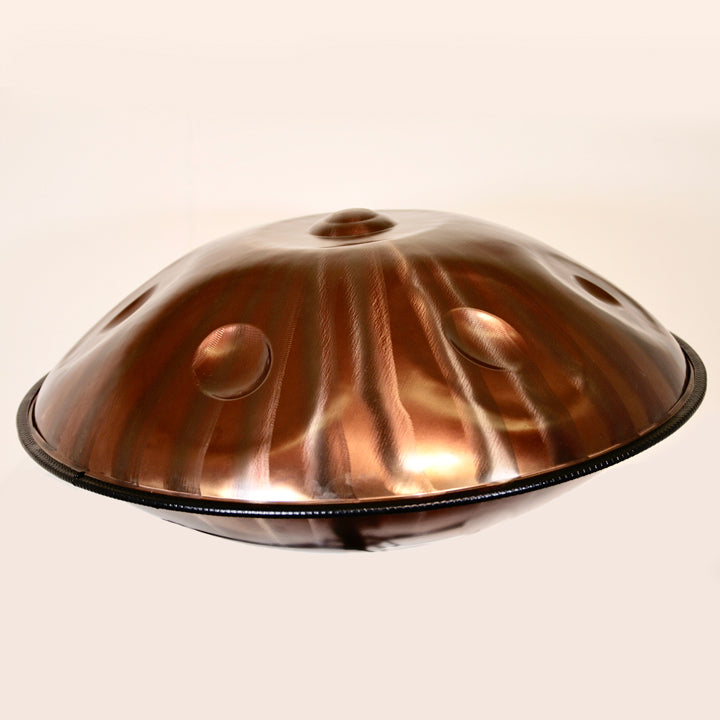
AeloPan Handpan glänzt Bronze auf einem Handpanständer bereit zum spielen
 AeloPan Handpan Bronze glänzend steht auf einem Ständer vor weißer Wand. Man sieht die Handpan leicht gedreht von der Seite
AeloPan Handpan Bronze glänzend steht auf einem Ständer vor weißer Wand. Man sieht die Handpan von vorne
Bronze schimmernde unterseite einer Aelopan Handpan ohne Bottomnotes. Die Handpan steht auf einem schwarzen Handpanständer
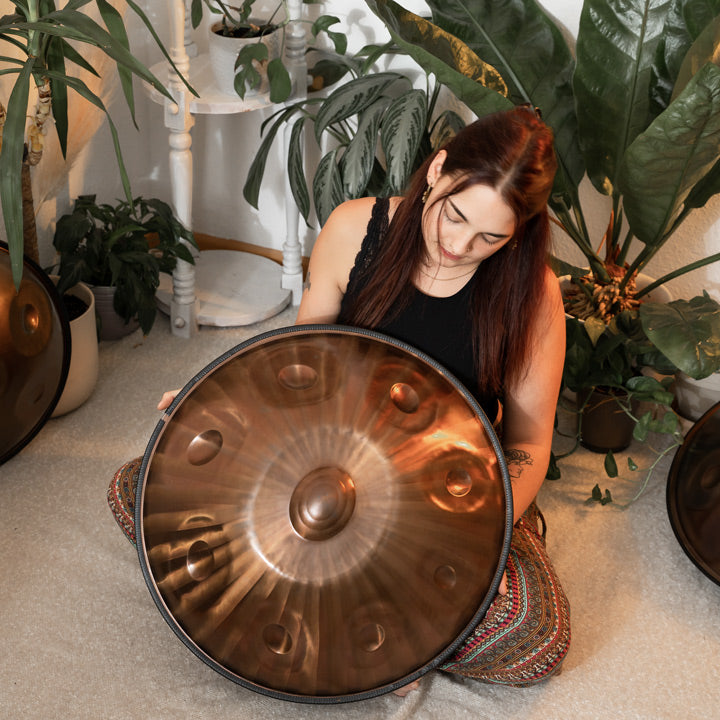
Nahaufnahme einer AeloPan Handpan auf dem Schoß einer versierten Handpanspielerin. Die Handpan schimmert Bronze gestreift. Im hintergrund sind Pflanzen zu sehen
Handpanspielerin zeigt die handgefertigte, Bronze schimmernde AeloPan Handpan. Sie sitzt in einem gemütlichen Raum, umgeben von Pflanzen und Handpans auf dem Boden
Eine Bronze gestreift glänzende AeloPan Handpan steht auf einem Ständer in einem schönen Raum zwischen Pflanzen
AeloPan Handpan glänzt Bronze auf einem Handpanständer bereit zum spielen
 AeloPan Handpan Bronze glänzend steht auf einem Ständer vor weißer Wand. Man sieht die Handpan leicht gedreht von der Seite
AeloPan Handpan Bronze glänzend steht auf einem Ständer vor weißer Wand. Man sieht die Handpan von vorne
Bronze schimmernde unterseite einer Aelopan Handpan ohne Bottomnotes. Die Handpan steht auf einem schwarzen Handpanständer
Nahaufnahme einer AeloPan Handpan auf dem Schoß einer versierten Handpanspielerin. Die Handpan schimmert Bronze gestreift. Im hintergrund sind Pflanzen zu sehen
Handpanspielerin zeigt die handgefertigte, Bronze schimmernde AeloPan Handpan. Sie sitzt in einem gemütlichen Raum, umgeben von Pflanzen und Handpans auf dem Boden
Eine Bronze gestreift glänzende AeloPan Handpan steht auf einem Ständer in einem schönen Raum zwischen Pflanzen
Regular price €1.921,77
Regular price Sale price €1.921,77
Sale Sold out
Tax included. Shipping calculated at checkout.

Aktuell nicht vorrätig. Kann als Sonderanfertigung vorbestellt werden. Lieferzeit je nach Modell und Auslastung 1,5 bis 4 Monate.

The Aelo Handpan is characterized by a warm and long-lasting sound.
Thanks to its perfectly balanced resonance and balanced vibration development, the Aelo Handpan is the perfect combination of percussion and melody instrument. Even a light touch produces fine and distinctive sounds. This ensures an expressive and detailed sound performance.

The AeloPans are ideal for both beginners and professional musicians. Thanks to their above-average sound volume, they are also particularly suitable for playing in large rooms or outdoors in nature and public spaces.

The Aelo Handpan is particularly intuitive and easy to play and can be used to create fascinating sound patterns. The soundscape ranges from simple to complex. The player is offered inexhaustible possibilities; from more complicated rhythms, virtuoso melodies to touching chords and two-part melodies; the AeloPan can be combined in many ways.

The instrument's uniquely soft, ethereal and mysterious sounds quickly attract the listener's attention. The soothing sound takes you on an inner journey. The fascinating timbre of the Aelo Handpan is ideal for concerts, studio recordings, street music, as well as musical accompaniment for spiritual activities, e.g. yoga, sound therapy or meditation.

The high-quality material, rust-free and corrosion-resistant stainless steel, gives the Handpan its shine and elegant appearance. The material is robust and easy to clean. Due to the slightly higher material thickness compared to conventional stainless steel handpans, the AeloPans are more durable in tuning stability and less susceptible to knocks and falls.

Like every handpan, the AeloPans also consist of two stainless steel shells joined together to form the sound body. During the manufacturing process, the sound fields are elaborately worked into the curved surface by hand and then precisely tuned. As this is a manual process, dents and unevenness occur in the sound field - this is completely normal and is part of the visual character of a good handpan.

The Aelo handpan is professionally and perfectly tuned. It impresses with quality and sound at the highest level. The handpan has an optimal and well-balanced resonance vibration across all tones. There are no disturbing metallic sounds when playing. The timbre is warm and powerful. The resonance of the individual notes is enhanced by the solid stainless steel.

Diameter: 53 cm
Height: 26 cm
Weight: approx. 4kg
Material: stainless steel

Tuning name: Pygmy
Standard tone sequence: C#/ F# G# A C# E F# G# A
Atmosphere: Meditative - Introverted - Floating
Tonal center: DING
Mode: Aeolian minor
Tone range: Pentatonic

Semitones: 2-1-4-3-2-2-1-4

The C# Pygmy Handpan tuning explained:

Pygmy is an extremely popular scale. Apart from the name, this scale probably only has the number of notes up to the octave (pentatonic) in common with the music of the Pygmies. To our Western ears, the equi-pentatonic scale, which some African peoples traditionally use, would probably also be very unfamiliar. Nevertheless, both rhythmic patterns and melodic phrases can be realized very well with this hemitonic pentatonic scale.

A special feature of both Pygmy versions is that four of the five tones are each present an octave higher, allowing the overtones to be amplified (cf. natural scale).

Pygmy is often referred to as dorianpentatonic . This designation is not comprehensible to us, as there is no sixth degree at all. The term dorianpentatonic probably originated in analogy to the church scales. This approach makes little sense in connection with pentatonic scales, as the major sixth note, which is absolutely essential for the Dorian mode, is not present in this example. Apart from that, Pygmy is a very cool sounding scale!

Music theory features of the Pygmy handpan tuning:

The special feature of this Pygmy tuning is that it is a hemitonic pentatonic. This means that, in contrast to a normal major or minor pentatonic (anhemitonic pentatonics), a semitone step is also included. This is located between the first note and the second note, so the first three notes of the natural minor scale (Aeolian) are present in Pygmy without a leap. In the F Pygmy example, this would be F-G-Ab. From this note there is a leap of a major third (also known as a major third) to the fifth note (in the example: note C) This is followed by a minor third leap and a whole tone step that leads to the octave. From here there is the same sequence of notes up to the duodecimal (fifth note in the upper octave).

Despite the presence of a semitone step and its potential for friction, Pygmy is very easy and intuitive to play. A clear recommendation even for beginners!

Possible tone sequences of the C# Pygmy scale:

Tone sequence with 9 notes: C#/ F# G# A C# E F# G# A (as in video 1)
Tone sequence with 10 notes:

  • Option 1 - extension into the treble: C#/ F# G# A C# E F# G# A (B)
  • Option 2 - extension to the low notes: C#/ (D) F# G# A C# E F# G# A

Tone sequence with 11 notes:

  • Option 1 - extension into the high notes: C#/ F# G# A C# E F# G# A (B) (C#)
  • Option 2 - extension in the width: C#/ F# G# A (B) C# (D) E F# G# A
  • Option 3 - extension into the bass: C#/ (D) (E) F# G# A C# E F# G# A

Tone sequence with 12 notes:

  • Option 1 - extension to the high notes: C#/ F# G# A C# E F# G# A (B) (C#) (D)
  • Option 2 - extension into the width: C#/ F# G# A (B) C# (D) E F# G# A (B)
  • Option 3 - extension into the bass: C#/ (D) (E) F# G# A (B) C# E F# G# A

Tone sequence with 13 notes:

  • Option 1 - extension into the high notes: C#/ F# G# A C# E F# G# A (B) (C#) (D) (E)
  • Option 2 - extension to the width: C#/ F# G# A (B) C# (D) E F# G# A (B) (C#)
  • Option 3 - extension into the lower register: C#/ (D) (E) F# G# A (B) C# (D) E F# G# A

Tone sequence with 14 notes:

  • Option 1 - extension to the high notes: C#/ F# G# A C# (D) E F# G# A (B) (C#) (D) (E)
  • Option 2 - extension in the width:
  • Option 3 - extension into the lower range: C#/ (D) (E) F# G# A (B) C# (D) E F# G# A (B)

Tone sequence with 15 notes:

  • Option 1 - extension into the treble: C#/ F# G# A (B) C# (D) E F# G# A (B) (C#) (D) (E)
  • Option 3 - extension to the low notes: C#/ (D) (E) F# G# A (B) C# (D) E F# G# A (B) (C#)

Tone sequence with 16 notes:

  • Option 1 - extension into the treble: C#/ (E) F# G# A (B) C# (D) E F# G# A (B) (C#) (D) (E)
  • Option 3 - extension into the low notes: C#/ (D) (E) F# G# A (B) C# (D) E F# G# A (B) (C#) (D)

Tone sequence with 17 notes: C#/(D) (E) F# G# A (B) C# (D) E F# G# A (B) (C#) (D) (E) (as in video 2)

*Bottom notes are additional tone fields on the underside of the handpan and are written in round brackets, e.g. (D E).

Mutanthandpans have additional notes on the top shell in the second row - between the chorus and the root note. Mutant notes are written in curly brackets, e.g. {D E}.

→ You can read a detailed article on mutant & bottom-note handpans here: Blog post

Discover our full selection of mutant & bottom-note handpans here

We only list the standard layouts under "Possible tone sequences". On request, our handpans can also be made with other notes and in other arrangements. Simply write an email with your request to: service@handpan.world

Matching handpan tunings for C# Pygmy:

Very suitable for improvised playing together:

Also good for composing together:

    Product description

    The Aelo Handpan is characterized by a warm and long-lasting sound.
    Thanks to its perfectly balanced resonance and balanced vibration development, the Aelo Handpan is the perfect combination of percussion and melody instrument. Even a light touch produces fine and distinctive sounds. This ensures an expressive and detailed sound performance.

    The AeloPans are ideal for both beginners and professional musicians. Thanks to their above-average sound volume, they are also particularly suitable for playing in large rooms or outdoors in nature and public spaces.

    The Aelo Handpan is particularly intuitive and easy to play and can be used to create fascinating sound patterns. The soundscape ranges from simple to complex. The player is offered inexhaustible possibilities; from more complicated rhythms, virtuoso melodies to touching chords and two-part melodies; the AeloPan can be combined in many ways.

    The instrument's uniquely soft, ethereal and mysterious sounds quickly attract the listener's attention. The soothing sound takes you on an inner journey. The fascinating timbre of the Aelo Handpan is ideal for concerts, studio recordings, street music, as well as musical accompaniment for spiritual activities, e.g. yoga, sound therapy or meditation.

    The high-quality material, rust-free and corrosion-resistant stainless steel, gives the Handpan its shine and elegant appearance. The material is robust and easy to clean. Due to the slightly higher material thickness compared to conventional stainless steel handpans, the AeloPans are more durable in tuning stability and less susceptible to knocks and falls.

    Like every handpan, the AeloPans also consist of two stainless steel shells joined together to form the sound body. During the manufacturing process, the sound fields are elaborately worked into the curved surface by hand and then precisely tuned. As this is a manual process, dents and unevenness occur in the sound field - this is completely normal and is part of the visual character of a good handpan.

    The Aelo handpan is professionally and perfectly tuned. It impresses with quality and sound at the highest level. The handpan has an optimal and well-balanced resonance vibration across all tones. There are no disturbing metallic sounds when playing. The timbre is warm and powerful. The resonance of the individual notes is enhanced by the solid stainless steel.

    Specifications

    Diameter: 53 cm
    Height: 26 cm
    Weight: approx. 4kg
    Material: stainless steel

    About the tuning

    Tuning name: Pygmy
    Standard tone sequence: C#/ F# G# A C# E F# G# A
    Atmosphere: Meditative - Introverted - Floating
    Tonal center: DING
    Mode: Aeolian minor
    Tone range: Pentatonic

    Semitones: 2-1-4-3-2-2-1-4

    The C# Pygmy Handpan tuning explained:

    Pygmy is an extremely popular scale. Apart from the name, this scale probably only has the number of notes up to the octave (pentatonic) in common with the music of the Pygmies. To our Western ears, the equi-pentatonic scale, which some African peoples traditionally use, would probably also be very unfamiliar. Nevertheless, both rhythmic patterns and melodic phrases can be realized very well with this hemitonic pentatonic scale.

    A special feature of both Pygmy versions is that four of the five tones are each present an octave higher, allowing the overtones to be amplified (cf. natural scale).

    Pygmy is often referred to as dorianpentatonic . This designation is not comprehensible to us, as there is no sixth degree at all. The term dorianpentatonic probably originated in analogy to the church scales. This approach makes little sense in connection with pentatonic scales, as the major sixth note, which is absolutely essential for the Dorian mode, is not present in this example. Apart from that, Pygmy is a very cool sounding scale!

    Music theory features of the Pygmy handpan tuning:

    The special feature of this Pygmy tuning is that it is a hemitonic pentatonic. This means that, in contrast to a normal major or minor pentatonic (anhemitonic pentatonics), a semitone step is also included. This is located between the first note and the second note, so the first three notes of the natural minor scale (Aeolian) are present in Pygmy without a leap. In the F Pygmy example, this would be F-G-Ab. From this note there is a leap of a major third (also known as a major third) to the fifth note (in the example: note C) This is followed by a minor third leap and a whole tone step that leads to the octave. From here there is the same sequence of notes up to the duodecimal (fifth note in the upper octave).

    Despite the presence of a semitone step and its potential for friction, Pygmy is very easy and intuitive to play. A clear recommendation even for beginners!

    Possible tone sequences of the C# Pygmy scale:

    Tone sequence with 9 notes: C#/ F# G# A C# E F# G# A (as in video 1)
    Tone sequence with 10 notes:

    • Option 1 - extension into the treble: C#/ F# G# A C# E F# G# A (B)
    • Option 2 - extension to the low notes: C#/ (D) F# G# A C# E F# G# A

    Tone sequence with 11 notes:

    • Option 1 - extension into the high notes: C#/ F# G# A C# E F# G# A (B) (C#)
    • Option 2 - extension in the width: C#/ F# G# A (B) C# (D) E F# G# A
    • Option 3 - extension into the bass: C#/ (D) (E) F# G# A C# E F# G# A

    Tone sequence with 12 notes:

    • Option 1 - extension to the high notes: C#/ F# G# A C# E F# G# A (B) (C#) (D)
    • Option 2 - extension into the width: C#/ F# G# A (B) C# (D) E F# G# A (B)
    • Option 3 - extension into the bass: C#/ (D) (E) F# G# A (B) C# E F# G# A

    Tone sequence with 13 notes:

    • Option 1 - extension into the high notes: C#/ F# G# A C# E F# G# A (B) (C#) (D) (E)
    • Option 2 - extension to the width: C#/ F# G# A (B) C# (D) E F# G# A (B) (C#)
    • Option 3 - extension into the lower register: C#/ (D) (E) F# G# A (B) C# (D) E F# G# A

    Tone sequence with 14 notes:

    • Option 1 - extension to the high notes: C#/ F# G# A C# (D) E F# G# A (B) (C#) (D) (E)
    • Option 2 - extension in the width:
    • Option 3 - extension into the lower range: C#/ (D) (E) F# G# A (B) C# (D) E F# G# A (B)

    Tone sequence with 15 notes:

    • Option 1 - extension into the treble: C#/ F# G# A (B) C# (D) E F# G# A (B) (C#) (D) (E)
    • Option 3 - extension to the low notes: C#/ (D) (E) F# G# A (B) C# (D) E F# G# A (B) (C#)

    Tone sequence with 16 notes:

    • Option 1 - extension into the treble: C#/ (E) F# G# A (B) C# (D) E F# G# A (B) (C#) (D) (E)
    • Option 3 - extension into the low notes: C#/ (D) (E) F# G# A (B) C# (D) E F# G# A (B) (C#) (D)

    Tone sequence with 17 notes: C#/(D) (E) F# G# A (B) C# (D) E F# G# A (B) (C#) (D) (E) (as in video 2)

    *Bottom notes are additional tone fields on the underside of the handpan and are written in round brackets, e.g. (D E).

    Mutanthandpans have additional notes on the top shell in the second row - between the chorus and the root note. Mutant notes are written in curly brackets, e.g. {D E}.

    → You can read a detailed article on mutant & bottom-note handpans here: Blog post

    Discover our full selection of mutant & bottom-note handpans here

    We only list the standard layouts under "Possible tone sequences". On request, our handpans can also be made with other notes and in other arrangements. Simply write an email with your request to: service@handpan.world

    Matching handpan tunings for C# Pygmy:

    Very suitable for improvised playing together:

    Also good for composing together:

      View full details

      Questions & answers when buying a handpan:

      Reference to manual work on our Handpan instruments

      Our handpans are elaborately crafted by hand. Even though our handpans are made with the utmost care and craftsmanship, natural differences in color, slight variations in design and minimal manufacturing marks, such as fine scratches or unevenness on the tone fields and the sound body, may occur.

      Visible hammer marks, which are caused by the precise tuning of the instrument by hand, are characteristic features of handmade handpans. They are evidence of authentic craftsmanship and do not represent a quality defect. On the contrary, they emphasize the uniqueness of each instrument.

      Pre-orders & custom-made products

      Pre-orders:
      Are you interested in a handpan that we don't currently have in stock? No problem, we can have your desired handpan made for you.


      Custom-made products:

      At Handpan.World you can order your handpan exactly as you want it - be it the scale, the note layout or other individual details.

      Do you have a special scale or note layout in mind that we don't offer as standard? We can have your handpan made to your specifications by the manufacturer of your choice.

      Contact us by email at service@handpan.world or by phone if you have any special requests.

      Our handpans are manufactured with the utmost care and precision to guarantee the highest sound quality. However, this quality takes time. Below you will find an overview of the estimated production time for your handpan:

      Estimated production time:

      • Standard instruments (9-12 notes, root notes G3 to B2): approx. 4 to 10 weeks
      • Custom-made instruments with low tunings (fundamental A2-E2): up to 3 months
      • Bottomnote instruments up to 15 notes: up to 3.5 months
      • Bottom-note instruments up to 21 notes: up to 4 months
      • Longer production times are to be expectedfor the manufacturers Svaraa, Aya Sounds, NamiPan and Handromeda, in particular due to the high volume of orders.

      Note: The stated production times are estimates and do not represent binding delivery dates. Additional factors such as shipping times or possible customs clearance may extend the delivery time.

      The estimates are based on our previous experience and are provided without guarantee. Depending on the order situation, delays in the processes or unforeseen events, the actual production time may vary and may be shorter or longer.

      You are welcome to contact us at any time to inquire about progress and estimated delivery times.

      Note: All items not in stock are made separately at the customer's request and are considered custom-made in accordance with § 312 d para. 4 BGB .

      Pre-orders in accordance with Article L 121-20-12 of the Consumer Code are expressly not offered.