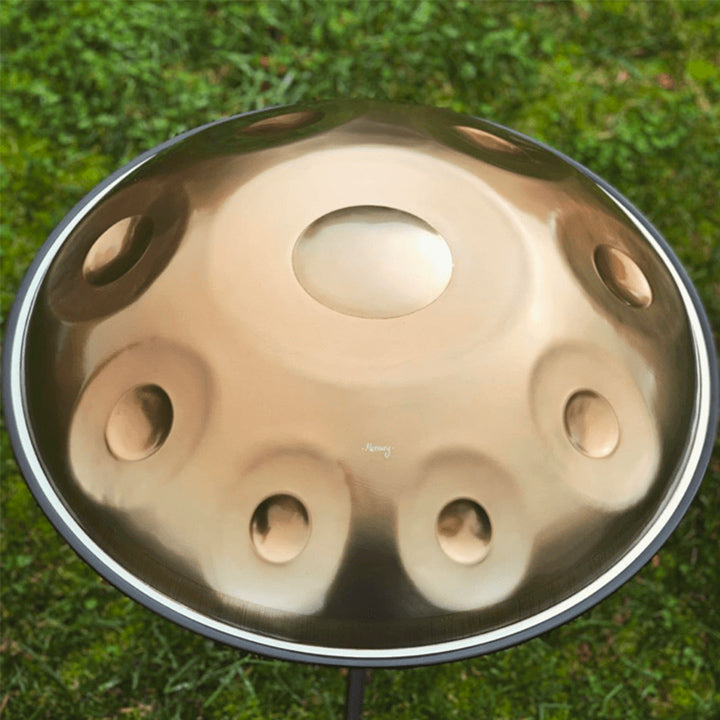
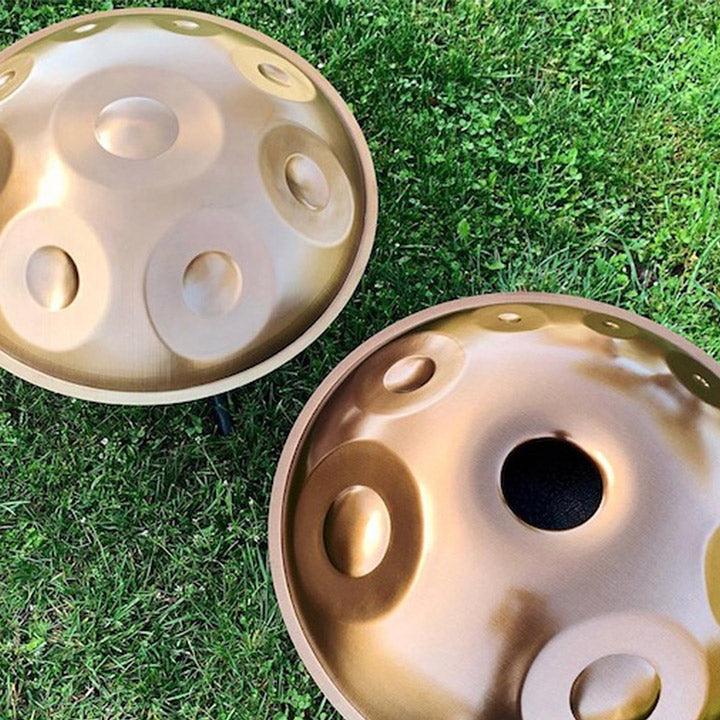
Lumar D Hijaz 14 / 440 Hz
Scegli tra le opzioni disponibili
Titolo
Low stock: 1 left
Lieferbar innerhalb von 7 - 14 Werktagen.
Scegli tra le opzioni disponibili
Titolo
Low stock: 1 left
Lieferbar innerhalb von 7 - 14 Werktagen.
Aktuell nicht vorrätig – Jetzt als Sonderanfertigung vorbestellen Unsere Handpans werden mit größter Sorgfalt und Präzision handgefertigt, um Dir höchste Klangqualität zu garantieren. Diese außergewöhnliche Qualität benötigt jedoch Zeit.Hier findest Du eine Übersicht der voraussichtlichen Fertigungsdauer:
• Standard-Instrumente (9-12 Noten, Grundtöne G3 bis B2): ca. 4 bis 10 Wochen
• Sonderanfertigungen mit tiefen Stimmungen (Grundton A2-E2): bis zu 3 Monate
• Bottomnote-Instrumente bis 15 Noten: bis zu 3,5 Monate
• Bottomnote-Instrumente bis 21 Noten: bis zu 4 Monate
• Bei den Herstellern Svaraa, Aya Sounds, NamiPan und Handromeda ist aufgrund hoher Nachfrage mit längeren Fertigungszeiten zu rechnen. Currently out of stock - pre-order now as a custom-made product Our handpans are handmade with the utmost care and precision to guarantee you the highest sound quality. However, this exceptional quality takes time.
Here you can find an overview of the expected production times:
•Standard instruments (9-12 notes, fundamental notes G3 to B2): approx. 4 to 10 weeks
•Custom-made items with low tunings (fundamental notes A2-E2): up to 3 months
•Bottom note instruments up to 15 notes: up to 3.5 months
•Bottom note instruments up to 21 notes: up to 4 months
•Due to high demand, longer production times can be expected for the manufacturers Svaraa, Aya Sounds, NamiPan and Handromeda.
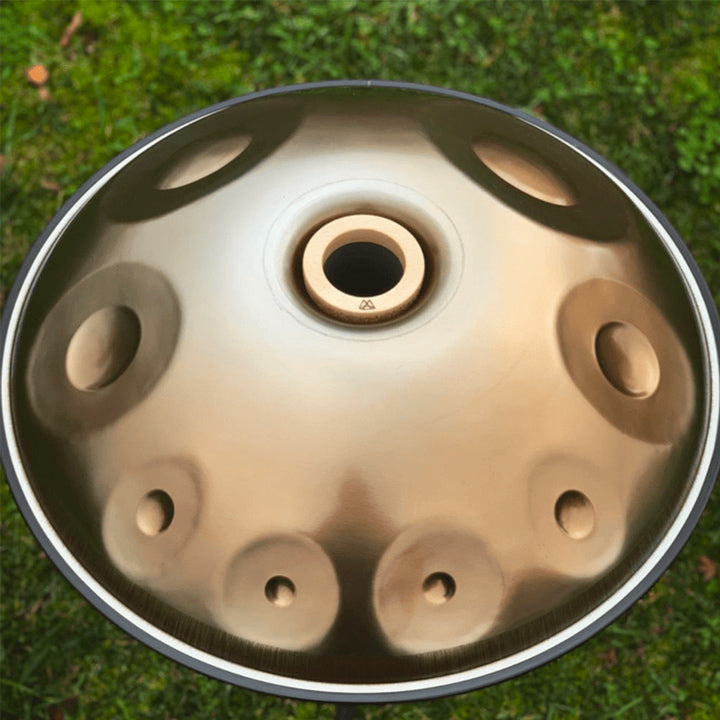
Nella Extended Collection ti presentiamo le nostre accordature ampliate con campi armonici aggiuntivi sulla parte inferiore dell'handpan, i cosiddetti "bottom notes". L'accordatura D Hijaz è disponibile con un numero di campi armonici che varia da 12 a 16.
Questi strumenti offrono una maggiore variabilità nello stile esecutivo e un più ampio spettro per la composizione. Grazie al maggior numero di campi armonici, si ottengono sequenze di note (scale/accordature) diverse da quella predefinita.
Più campi armonici possiede il tuo handpan, più versatile sarà il modo in cui potrai suonarlo, ma al contempo lo strumento diventerà anche più impegnativo da utilizzare.
Sequenza di note standard: D/ (F# G) A C D Eb F# G A C D
Atmosfera: Esotica - Orientale - Lontana
Centro tonale: DING o 1ª o 2ª nota
Modo: frigio dominante / HMV
Materiale sonoro: Eptatonico
Passi di semitono (Semitones): - 7 - 3 - 2 - 1 - 3 - 1 - 2
dal centro tonale 1ª nota: 1-3-1-2-3 …
Descrizione dell'accordatura:
La scala Hijaz prende il nome dal maqam arabo/turco Hijaz. Immagina una carovana che si allontana in un vecchio film ambientato in Oriente: ecco come suona la scala Hijaz. Questo maqam si distingue per una seconda minore dalla tonica (centro tonale) alla nota immediatamente successiva (cfr. frigio), ma è seguito da una terza minore (3 semitoni), il che rende la terza nota, rispetto alla tonica, una terza maggiore (da cui "frigio dominante"). La scala può anche essere spiegata prendendo una scala minore armonica e iniziandola dalla quinta nota della scala stessa.
Esempio Sol minore armonico: G - A - Bb - C - D - Eb - F# - G
Suonato partendo da D si ottiene D Hijaz: D - Eb - F# - G - A - Bb - C - D
Nel mondo dell'handpan esistono diverse versioni su come questa scala venga trasposta sullo strumento. Una delle più comuni è la seguente:
DING è la tonica (centro tonale), la prima nota è una quinta, poi una terza minore. La terza nota è un'ottava sopra il DING. Da qui si procede a toni interi fino alla nona nota, che forma una quinta rispetto alla terza nota (un'ottava più una quinta dal DING).
Nel jazz, questo modo è chiamato anche HMV, ovvero Harmonico Minore suonato dal V grado.
La scala Hijaz viene spesso utilizzata per conferire un tocco orientale. Inoltre, viene impiegata nella musica flamenco e in molti stili di musica colta e popolare turca e araba.
Una scala molto affascinante per esplorare melodie incantevoli e sviluppare alcune idee armoniche. Molto adatta come estensione della scala Kurd.
Possibili sequenze di note:
Sequenza con 12 note: D/ (F# G) A A# C D D# F# G A (C D)
Sequenza con 13 note:
-Opzione 1 - Estensione verso le note alte: D/ A C D D# F# G A C (D F# G A)
-Opzione 2 - Estensione in ampiezza: D/ (F# G) , A# C D D# F# G A (C D F#)
Sequenza con 14 note:
-Opzione 1 - Estensione verso le note alte: D/ A C D D# F# G A C (D F# G A C)
-Opzione 2 - Estensione in ampiezza: D/ (F# G) , A# C D D# F# G A C (D F# G)
Sequenza con 15 note:
-Opzione 1 - Estensione verso le note alte: (C) D / (F# G) A C D D# F# G A C (D F# G A)
-Opzione 2 - Estensione in ampiezza: (A# C) D / (F# G) A C D D# F# G A C (D F# G)
-Opzione 3 - Estensione verso le note basse: (A A# C) D / (F# G) A C D D# F# G A C (D)
Sequenza con 16 note:
-Opzione 1 - Estensione verso le note alte: (C) D / (F# G) A C D D# F# G A C (D F# G A)
-Opzione 2 - Estensione in ampiezza: (A# C) D / (F# G) A C D D# F# G A C (D F# G)
-Opzione 3 - Estensione verso le note basse: (A A# C) D / (F# G) A C D D# F# G A C (D F#)
*Le note tra parentesi sono i bottom-notes. Su richiesta, possono essere disposte anche in modo diverso. Inviate semplicemente una e-mail con la vostra richiesta a: service@handpan.world
Accordature compatibili:
Molto adatte per suonare insieme in improvvisazione:
- G Romanian Hijaz
- G Harmonic Minor
- D Raga Desh
- C Syamalam
- G Kurd
- A Celtic Minor / Amara
- G Sabye
- G Celtic Minor/ Amara
- G Mystic
- A Hijaz
Presto presenteremo qui il produttore che realizza questo handpan per te.
Descrizione del prodotto
Nella Extended Collection ti presentiamo le nostre accordature ampliate con campi armonici aggiuntivi sulla parte inferiore dell'handpan, i cosiddetti "bottom notes". L'accordatura D Hijaz è disponibile con un numero di campi armonici che varia da 12 a 16.
Questi strumenti offrono una maggiore variabilità nello stile esecutivo e un più ampio spettro per la composizione. Grazie al maggior numero di campi armonici, si ottengono sequenze di note (scale/accordature) diverse da quella predefinita.
Più campi armonici possiede il tuo handpan, più versatile sarà il modo in cui potrai suonarlo, ma al contempo lo strumento diventerà anche più impegnativo da utilizzare.
Informazioni sull'accordatura
Sequenza di note standard: D/ (F# G) A C D Eb F# G A C D
Atmosfera: Esotica - Orientale - Lontana
Centro tonale: DING o 1ª o 2ª nota
Modo: frigio dominante / HMV
Materiale sonoro: Eptatonico
Passi di semitono (Semitones): - 7 - 3 - 2 - 1 - 3 - 1 - 2
dal centro tonale 1ª nota: 1-3-1-2-3 …
Descrizione dell'accordatura:
La scala Hijaz prende il nome dal maqam arabo/turco Hijaz. Immagina una carovana che si allontana in un vecchio film ambientato in Oriente: ecco come suona la scala Hijaz. Questo maqam si distingue per una seconda minore dalla tonica (centro tonale) alla nota immediatamente successiva (cfr. frigio), ma è seguito da una terza minore (3 semitoni), il che rende la terza nota, rispetto alla tonica, una terza maggiore (da cui "frigio dominante"). La scala può anche essere spiegata prendendo una scala minore armonica e iniziandola dalla quinta nota della scala stessa.
Esempio Sol minore armonico: G - A - Bb - C - D - Eb - F# - G
Suonato partendo da D si ottiene D Hijaz: D - Eb - F# - G - A - Bb - C - D
Nel mondo dell'handpan esistono diverse versioni su come questa scala venga trasposta sullo strumento. Una delle più comuni è la seguente:
DING è la tonica (centro tonale), la prima nota è una quinta, poi una terza minore. La terza nota è un'ottava sopra il DING. Da qui si procede a toni interi fino alla nona nota, che forma una quinta rispetto alla terza nota (un'ottava più una quinta dal DING).
Nel jazz, questo modo è chiamato anche HMV, ovvero Harmonico Minore suonato dal V grado.
La scala Hijaz viene spesso utilizzata per conferire un tocco orientale. Inoltre, viene impiegata nella musica flamenco e in molti stili di musica colta e popolare turca e araba.
Una scala molto affascinante per esplorare melodie incantevoli e sviluppare alcune idee armoniche. Molto adatta come estensione della scala Kurd.
Possibili sequenze di note:
Sequenza con 12 note: D/ (F# G) A A# C D D# F# G A (C D)
Sequenza con 13 note:
-Opzione 1 - Estensione verso le note alte: D/ A C D D# F# G A C (D F# G A)
-Opzione 2 - Estensione in ampiezza: D/ (F# G) , A# C D D# F# G A (C D F#)
Sequenza con 14 note:
-Opzione 1 - Estensione verso le note alte: D/ A C D D# F# G A C (D F# G A C)
-Opzione 2 - Estensione in ampiezza: D/ (F# G) , A# C D D# F# G A C (D F# G)
Sequenza con 15 note:
-Opzione 1 - Estensione verso le note alte: (C) D / (F# G) A C D D# F# G A C (D F# G A)
-Opzione 2 - Estensione in ampiezza: (A# C) D / (F# G) A C D D# F# G A C (D F# G)
-Opzione 3 - Estensione verso le note basse: (A A# C) D / (F# G) A C D D# F# G A C (D)
Sequenza con 16 note:
-Opzione 1 - Estensione verso le note alte: (C) D / (F# G) A C D D# F# G A C (D F# G A)
-Opzione 2 - Estensione in ampiezza: (A# C) D / (F# G) A C D D# F# G A C (D F# G)
-Opzione 3 - Estensione verso le note basse: (A A# C) D / (F# G) A C D D# F# G A C (D F#)
*Le note tra parentesi sono i bottom-notes. Su richiesta, possono essere disposte anche in modo diverso. Inviate semplicemente una e-mail con la vostra richiesta a: service@handpan.world
Accordature compatibili:
Molto adatte per suonare insieme in improvvisazione:
- G Romanian Hijaz
- G Harmonic Minor
- D Raga Desh
- C Syamalam
- G Kurd
- A Celtic Minor / Amara
- G Sabye
- G Celtic Minor/ Amara
- G Mystic
- A Hijaz
Informazioni sul produttore
Presto presenteremo qui il produttore che realizza questo handpan per te.

Questions & answers when buying a handpan:
Reference to manual work on our Handpan instruments
Our handpans are elaborately crafted by hand. Even though our handpans are made with the utmost care and craftsmanship, natural differences in color, slight variations in design and minimal manufacturing marks, such as fine scratches or unevenness on the tone fields and the sound body, may occur.
Visible hammer marks, which are caused by the precise tuning of the instrument by hand, are characteristic features of handmade handpans. They are evidence of authentic craftsmanship and do not represent a quality defect. On the contrary, they emphasize the uniqueness of each instrument.
Pre-orders & custom-made products
Pre-orders:
Are you interested in a handpan that we don't currently have in stock? No problem, we can have your desired handpan made for you.
Custom-made products:
At Handpan.World you can order your handpan exactly as you want it - be it the scale, the note layout or other individual details.
Do you have a special scale or note layout in mind that we don't offer as standard? We can have your handpan made to your specifications by the manufacturer of your choice.
Contact us by email at service@handpan.world or by phone if you have any special requests.
Our handpans are manufactured with the utmost care and precision to guarantee the highest sound quality. However, this quality takes time. Below you will find an overview of the estimated production time for your handpan:
Estimated production time:
- Standard instruments (9-12 notes, root notes G3 to B2): approx. 4 to 10 weeks
- Custom-made instruments with low tunings (fundamental A2-E2): up to 3 months
- Bottomnote instruments up to 15 notes: up to 3.5 months
- Bottom-note instruments up to 21 notes: up to 4 months
- Longer production times are to be expectedfor the manufacturers Svaraa, Aya Sounds, NamiPan and Handromeda, in particular due to the high volume of orders.
Note: The stated production times are estimates and do not represent binding delivery dates. Additional factors such as shipping times or possible customs clearance may extend the delivery time.
The estimates are based on our previous experience and are provided without guarantee. Depending on the order situation, delays in the processes or unforeseen events, the actual production time may vary and may be shorter or longer.
You are welcome to contact us at any time to inquire about progress and estimated delivery times.
Note: All items not in stock are made separately at the customer's request and are considered custom-made in accordance with § 312 d para. 4 BGB .
Pre-orders in accordance with Article L 121-20-12 of the Consumer Code are expressly not offered.
Info & tips for buying a handpan
View all-
Buying used handpans: tips and information
Discover the pros and cons of buying used handpans and what to look out for. Get tips on price-performance and technical development for the best purchase.
Buying used handpans: tips and information
Discover the pros and cons of buying used handpans and what to look out for. Get tips on price-performance and technical development for the best purchase.
-

Handpan Drum Buying Guide
Welcome to our comprehensive buying guide for handpans – we want to help you find the right handpan for you by highlighting the crucial criteria: material, sound, quality, service and...
Handpan Drum Buying Guide
Welcome to our comprehensive buying guide for handpans – we want to help you find the right handpan for you by highlighting the crucial criteria: material, sound, quality, service and...
-
Which Her(t)z type are you?
Make your own subjective impression of the two vibration frequencies of 440Hz and 432Hz.
Which Her(t)z type are you?
Make your own subjective impression of the two vibration frequencies of 440Hz and 432Hz.
Handpan basic knowledge
-
Extended Scales Bottom Note and Mutant Handpans...
Extended Scales and Mutant Handpans are an exciting new development in the world of handpans. They offer you an expanded range of musical possibilities and open up new worlds of...
Extended Scales Bottom Note and Mutant Handpans...
Extended Scales and Mutant Handpans are an exciting new development in the world of handpans. They offer you an expanded range of musical possibilities and open up new worlds of...
-
The fascinating history of the handpan: from it...
The handpan, also known as the hang, is a relatively young instrument that has gained immense popularity in recent years. Its enchanting sound and meditative playing style have captivated people...
The fascinating history of the handpan: from it...
The handpan, also known as the hang, is a relatively young instrument that has gained immense popularity in recent years. Its enchanting sound and meditative playing style have captivated people...
-
Matching handpan tunings
We are often asked about the possibilities of matching handpan tunings. When it comes to buying a second handpan or two close people want to buy two suitable instruments together,...
Matching handpan tunings
We are often asked about the possibilities of matching handpan tunings. When it comes to buying a second handpan or two close people want to buy two suitable instruments together,...