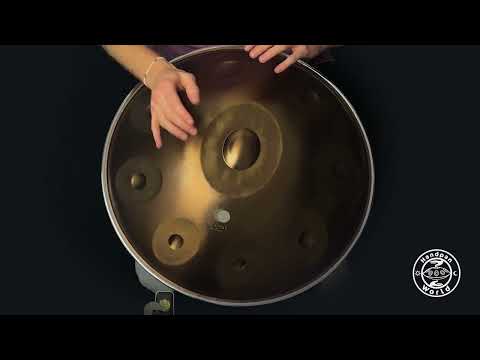
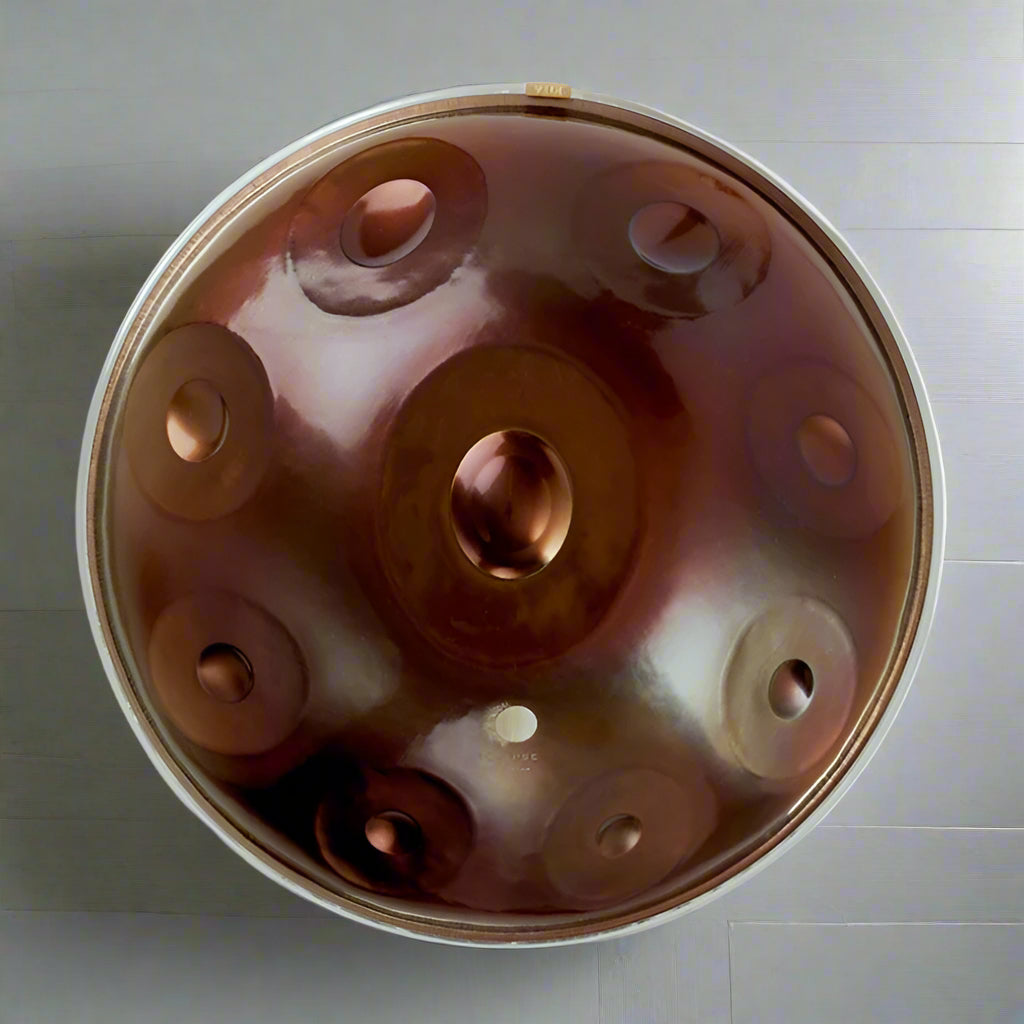
Tuning designation: Hijaz
Standard tone sequence: D/ A C D Eb F# G A
Atmosphere: Exotic - Oriental - Far
Tonal center: DING or also 1st or 2nd tone
Mode: phrygian dominant /HMV
Tone inventory: Heptatonic
Semitones: - 7 - 3 - 2 - 1 - 3 - 1 - 2
from tonal center 1st tone: 1-3-1-2-3 …
Tuning description:
The Hijaz scale takes its name from the Arabic / Turkish Maqam Hijaz. Imagine how the caravan rides away in old oriental movies. That is how the Hijaz scale sounds. This Maqam is characterized by a minor second from the root note (tonal center) to the next higher note (cf. phrygian), however, a minor third follows (3 semitones), whereby the third tone in relation to the root becomes a major third (hence phrygian dominant). The scale can also be explained by taking a harmonic minor scale and starting it from the fifth tone of the scale.
Example G minor harmonic: G - A - Bb - C - D - Eb - F# - G
Played from D results in D Hijaz :D - Eb -F# - G - A - Bb - C- D
There are different versions in the handpan world of how this scale is transferred to the handpan. One of the most common is the following:
DING is the root note (tonal center), to the first tone it is a fifth, then a minor third. The third tone is an octave above DING. From here it goes in whole tones up to the 9th tone, which forms a fifth to the 3rd tone (octave plus fifth from DING).
In jazz, this mode is also called HMV, so Harmonic Minor played from the V. degree.
Hijaz is often used to add an oriental touch. Furthermore, it is played in flamenco music and in many Turkish and Arabic art and folk music styles.
A very exciting scale to explore enchanting melodies and develop some harmonic ideas. Well suited as an extension to the Kurd scale.
Matching tunings:
Very well suited for playing together, improvised:
Also well suited for composing together: