

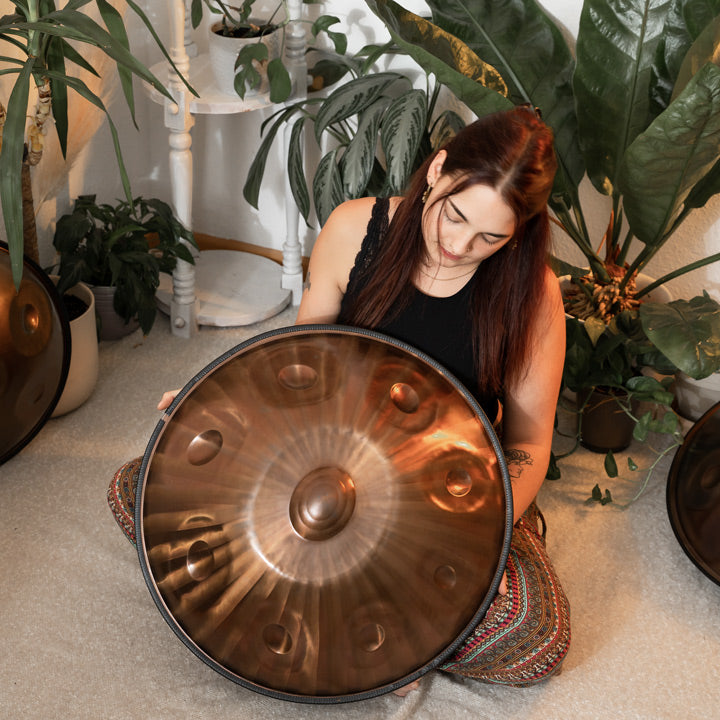
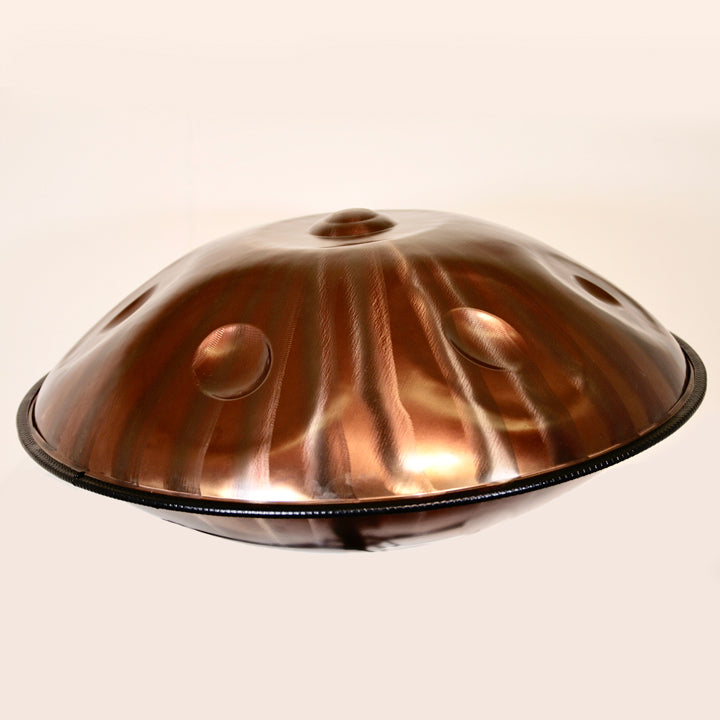
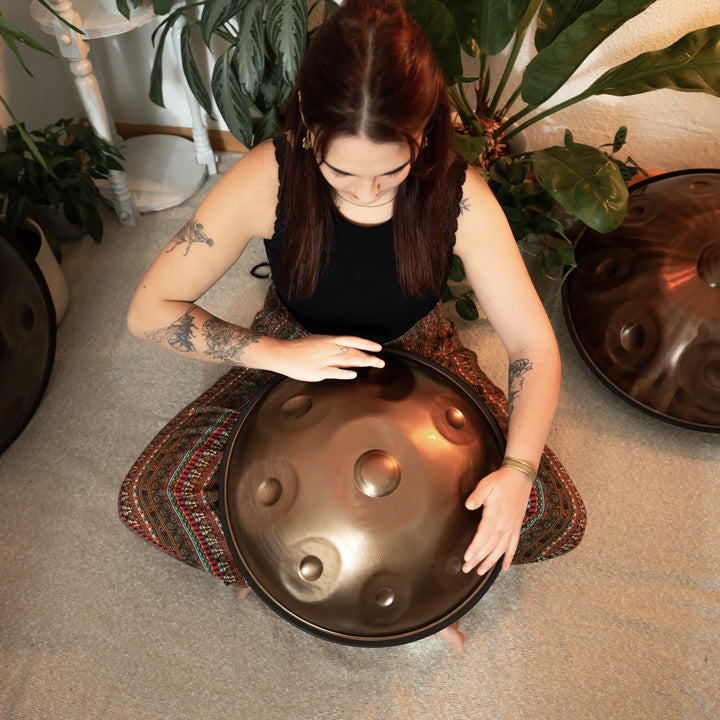
Aelo Handpan C# Sabye / Ashakiran | stainless steel
Aelo Handpan C# Sabye / Ashakiran | stainless steel


Choose from Available Options
Number of Tone Fields
Frequency
Low stock: 1 left
Lieferbar innerhalb von 7 - 14 Werktagen.








Info & tips for buying a handpan
View all-

Buying used handpans: tips and information
Discover the pros and cons of buying used handpans and what to look out for. Get tips on price-performance and technical development for the best purchase.
Buying used handpans: tips and information
Discover the pros and cons of buying used handpans and what to look out for. Get tips on price-performance and technical development for the best purchase.
-

Handpan Drum Buying Guide
Welcome to our comprehensive buying guide for handpans – we want to help you find the right handpan for you by highlighting the crucial criteria: material, sound, quality, service and...
Handpan Drum Buying Guide
Welcome to our comprehensive buying guide for handpans – we want to help you find the right handpan for you by highlighting the crucial criteria: material, sound, quality, service and...
-

Which Her(t)z type are you?
Make your own subjective impression of the two vibration frequencies of 440Hz and 432Hz.
Which Her(t)z type are you?
Make your own subjective impression of the two vibration frequencies of 440Hz and 432Hz.


Handpan basic knowledge
-

Extended Scales Bottom Note and Mutant Handpans...
Extended Scales and Mutant Handpans are an exciting new development in the world of handpans. They offer you an expanded range of musical possibilities and open up new worlds of...
Extended Scales Bottom Note and Mutant Handpans...
Extended Scales and Mutant Handpans are an exciting new development in the world of handpans. They offer you an expanded range of musical possibilities and open up new worlds of...
-

The fascinating history of the handpan: from it...
The handpan, also known as the hang, is a relatively young instrument that has gained immense popularity in recent years. Its enchanting sound and meditative playing style have captivated people...
The fascinating history of the handpan: from it...
The handpan, also known as the hang, is a relatively young instrument that has gained immense popularity in recent years. Its enchanting sound and meditative playing style have captivated people...
-

Matching handpan tunings
We are often asked about the possibilities of matching handpan tunings. When it comes to buying a second handpan or two close people want to buy two suitable instruments together,...
Matching handpan tunings
We are often asked about the possibilities of matching handpan tunings. When it comes to buying a second handpan or two close people want to buy two suitable instruments together,...


